Metal Stamping vs CNC Machining: Cost and Quality Comparison for Small Parts
For small parts under 50mm in diameter, metal stamping is generally 30-70% cheaper than CNC machining at production volumes above 10,000 units, while CNC machining offers superior dimensional accuracy at ±0.005mm versus stamping's ±0.05mm. The optimal choice depends on your annual volume, tolerance requirements, and part geometry complexity. This guide provides a data-driven comparison to help you select the right manufacturing process for your specific application.
Cost Structure Analysis: Where Your Money Goes
The fundamental cost difference between metal stamping and CNC machining lies in their cost structures. CNC machining has low setup costs (typically $50-$150 per program) but high per-part costs due to material waste and machine time. Metal stamping requires expensive tooling ($2,000-$15,000 for progressive dies) but delivers extremely low per-part costs once production begins.
For a typical small part (20mm x 15mm x 2mm aluminum bracket), CNC machining costs $2.50-$4.00 per part at 1,000 units, dropping to $1.20-$2.00 at 10,000 units. Metal stamping costs $0.80-$1.50 per part at 10,000 units, but the die amortization makes it uneconomical below 5,000 units. At 50,000 units, stamping costs drop to $0.15-$0.40 per part, making it 5-10 times cheaper than CNC machining at equivalent volumes.
The break-even point typically occurs between 3,000-8,000 units depending on material, tolerance, and part complexity. Below this threshold, CNC machining wins on total cost; above it, stamping dominates.
Tolerance and Quality Capabilities Compared
Part quality requirements directly impact process selection. CNC machining achieves tolerances of ±0.005mm for critical dimensions and surface finishes of Ra 0.4-0.8μm. Metal stamping achieves ±0.05mm standard tolerances, with precision stamping reaching ±0.01mm under controlled conditions. For parts requiring tight tolerances on multiple features, CNC machining is often the only viable option.
Surface finish also differs significantly. CNC machining produces Ra 0.8μm as standard, with polishing achieving Ra 0.2μm. Stamping typically yields Ra 1.6-3.2μm on cut edges and Ra 0.8μm on formed surfaces. The sheared edges of stamped parts exhibit characteristic rollover, burnish, and burr zones that may require secondary deburring operations.
Material properties affect quality differently in each process. CNC machining preserves the original grain structure of the material, maintaining mechanical properties throughout the part. Stamping work-hardens the material at bend zones, increasing strength but reducing ductility. For springs or parts requiring consistent material properties, CNC machining provides more predictable performance.
Material Selection and Thickness Considerations
Material availability and thickness constraints often determine the feasible manufacturing route. CNC machining handles virtually any material, including hardened steels (HRC 45-60), titanium alloys, and engineering plastics. Stamping works best with materials that have good ductility: low-carbon steel, aluminum alloys (5052, 6061), copper, brass, and stainless steel grades 301, 304, and 316.
Material thickness is a critical constraint for stamping. Precision stamping handles thicknesses from 0.05mm to 6.0mm, but the practical range for small parts is 0.1mm to 3.0mm. Thicker materials require larger presses and heavier dies, increasing tooling costs exponentially. CNC machining has no practical thickness limitation for small parts, though deep features may require specialized tooling.
| Process Parameter | CNC Machining | Metal Stamping |
| Typical Tolerance | ±0.005mm | ±0.05mm (precision: ±0.01mm) |
| Surface Finish | Ra 0.4-0.8μm | Ra 1.6-3.2μm |
| Minimum Quantity | 1-50 units | 5,000-10,000 units |
| Setup Cost | $50-$150 per program | $2,000-$15,000 per die |
| Unit Cost at 1,000 pcs | $2.50-$4.00 | Not economical |
| Unit Cost at 10,000 pcs | $1.20-$2.00 | $0.80-$1.50 |
| Unit Cost at 50,000 pcs | $0.90-$1.50 | $0.15-$0.40 |
| Tooling Lead Time | 1-3 days | 3-6 weeks |
| Production Lead Time | 3-7 days | 2-4 weeks |
| Material Waste | 30-50% | 5-15% |
Design Complexity and Feature Limitations
Part geometry significantly influences process selection. CNC machining handles complex 3D features, undercuts, threads, and deep pockets without difficulty. Stamping is limited to features achievable with a single or progressive die stroke: holes, slots, bends, embossing, and coining. Complex geometries may require multiple stamping operations or secondary machining, eroding the cost advantage.
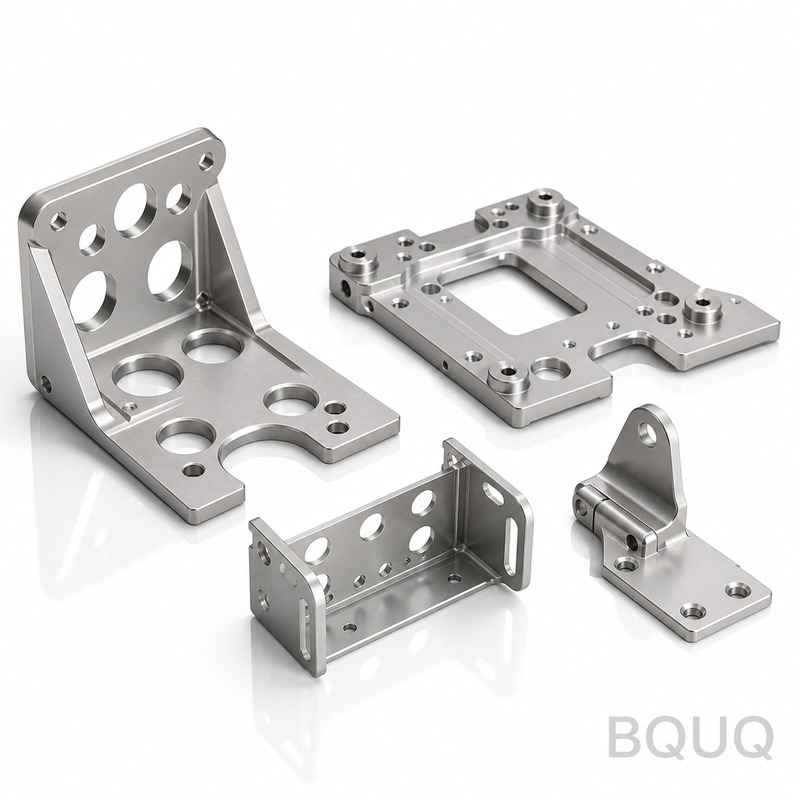
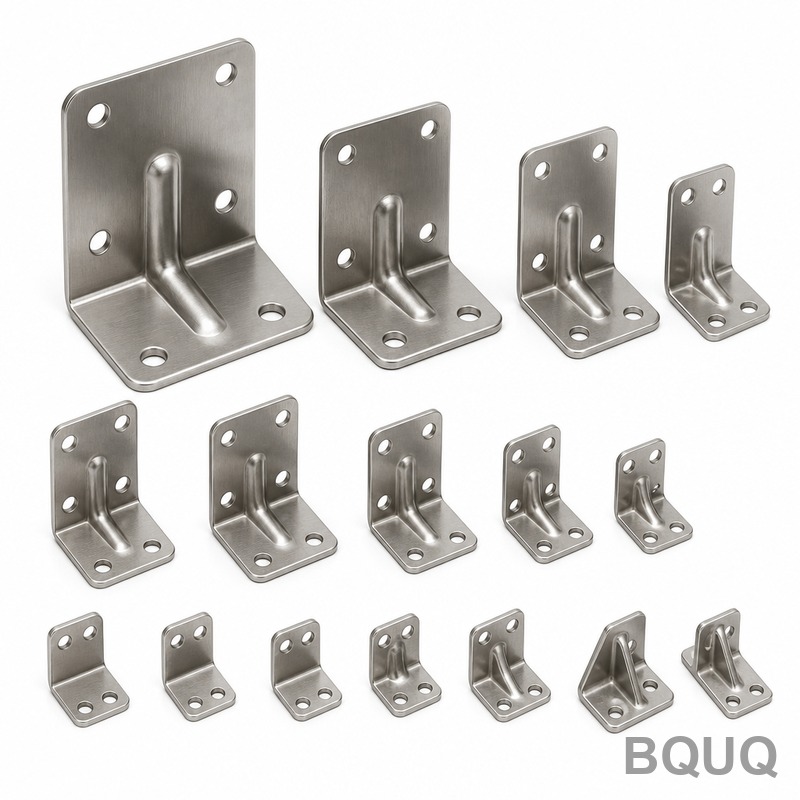
For small parts with high feature density, stamping often requires progressive dies that perform multiple operations in a single pass. A progressive die for a simple bracket with 4 holes and 2 bends costs $4,000-$8,000 and has a 4-6 week build time. The same part machined on a CNC lathe or mill has zero tooling cost but takes 3-5 minutes per part, limiting production to 100-200 parts per hour.
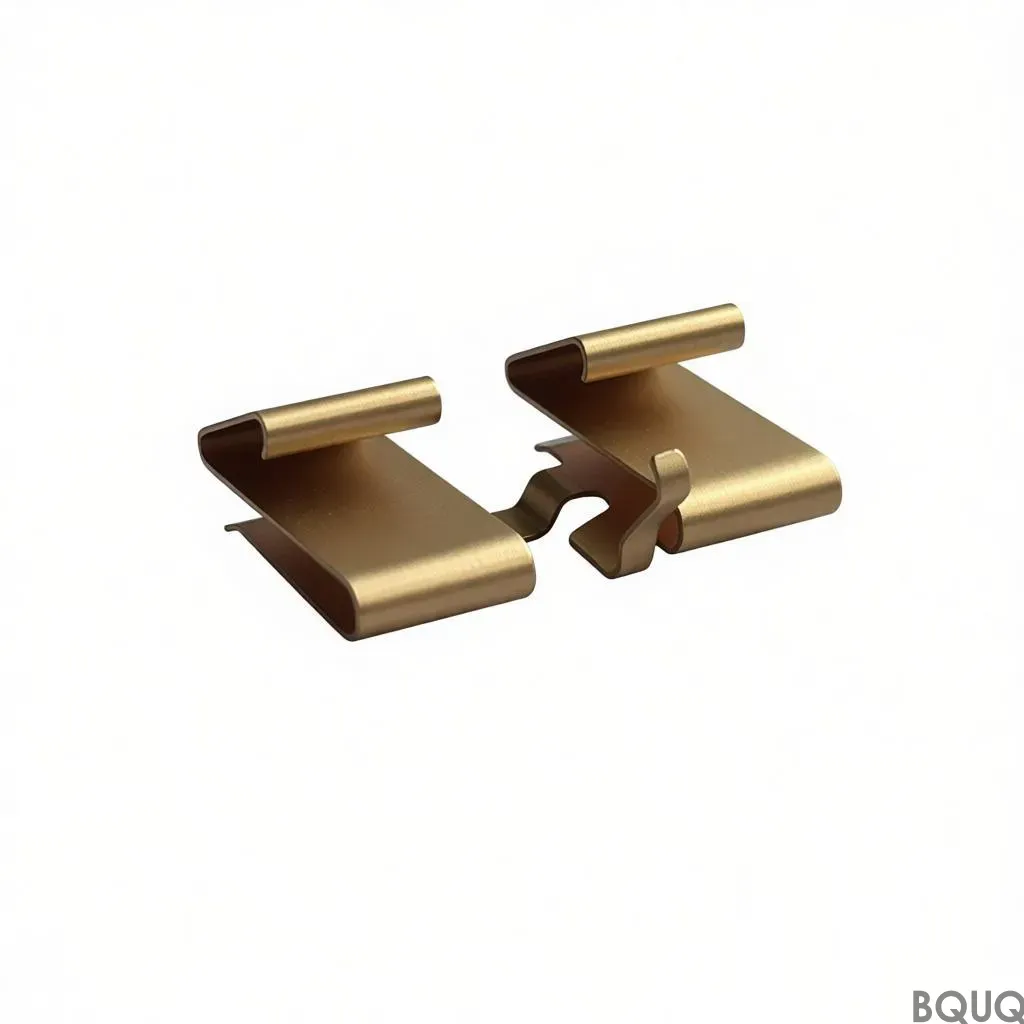
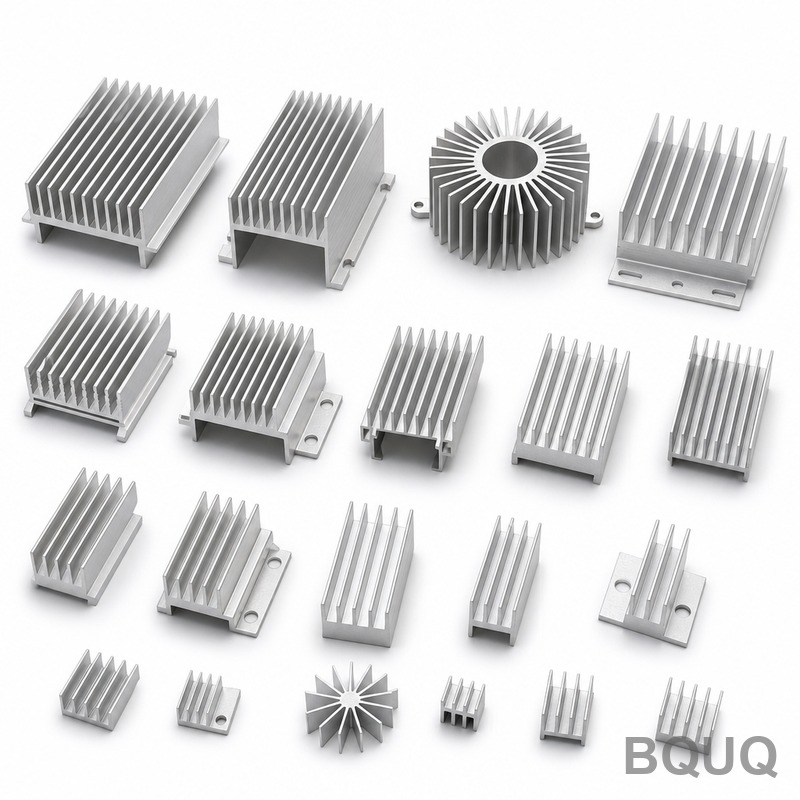
Consider a typical heat sink clip used in electronics cooling. This 15mm x 8mm part requires two 90-degree bends, one precision hole, and a dimple for spring tension. Stamping produces this at 600-1,000 parts per minute from strip stock, while CNC machining produces 60-120 parts per hour. At 100,000 annual units, stamped parts cost $0.05 each versus $1.80 machined, a 36x cost difference.
Production Volume and Lead Time Impact
Production volume dictates which process delivers the lowest total cost. For prototyping and low-volume production (1-500 units), CNC machining is always more economical. Setup is minimal, and parts are typically available within 24-72 hours. Stamping requires die design, material procurement, and die tryout, consuming 3-6 weeks before the first approved part.
Mid-volume production (500-5,000 units) presents a gray zone. CNC machining remains competitive, but stamping becomes viable if the part design allows for soft tooling or simplified dies. Soft tooling using aluminum or kirksite dies costs $1,500-$4,000 but lasts only 10,000-50,000 hits, making it suitable for pilot runs.
High-volume production (above 10,000 units) strongly favors stamping. Progressive dies operate at 100-1,000 strokes per minute, producing 10-60 parts per minute depending on strip layout. A single press with one operator produces 50,000-200,000 parts per shift. CNC machining would require 5-20 machines running three shifts to match this output, with significantly higher labor and energy costs.
Practical Recommendations for Process Selection
For small parts with annual demand below 5,000 units, choose CNC machining. The absence of tooling costs and rapid turnaround outweighs the higher per-part cost. This applies to custom brackets, prototype heat sinks, and replacement parts for legacy equipment.
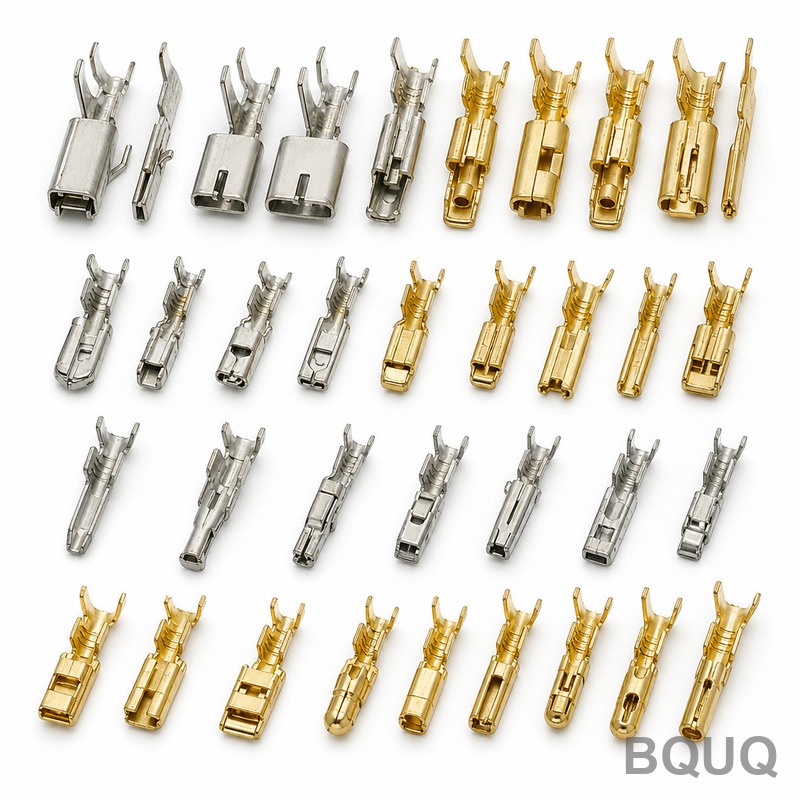
For annual demand above 10,000 units with tolerances of ±0.1mm or looser, select metal stamping. The tooling investment pays back within the first year through dramatically lower unit costs. This is standard for mass-produced electronics clips, connectors, and mounting brackets.
For parts requiring tight tolerances below ±0.02mm on multiple features, default to CNC machining regardless of volume. Precision stamping can achieve these tolerances but requires specialized presses, premium dies, and rigorous process control, eliminating the cost advantage.
Consider hybrid approaches for complex parts. CNC machining can produce stamping dies, while stamping can produce blanks that receive final CNC machining on critical features. This combined strategy reduces material waste and machining time while maintaining tight tolerances where needed.
FAQ-Style Tips for Engineers
How do I estimate stamping tooling costs for budgeting purposes? Request quotes based on part complexity, material thickness, and estimated die size. Simple flat blanks with holes cost $2,000-$4,000, while progressive dies with bends and forms cost $8,000-$15,000. Add 20-30% for hardened tool steel and precision components.
What is the minimum batch size where stamping becomes cheaper than CNC machining? For small parts under 30mm, the break-even point is typically 3,000-5,000 units. Above 10,000 units, stamping is almost always more economical. Below 1,000 units, CNC machining is always more cost-effective.
Can I switch from CNC machining to stamping for an existing part design? Yes, but expect to modify the design for manufacturability. Adjust tolerances to ±0.1mm where possible, add radii to internal corners (minimum 0.5mm), and ensure bend radii are at least 1x material thickness.
What secondary operations are required for stamped parts? Most stamped parts require deburring to remove edge burrs, which adds $0.01-$0.05 per part. Some require tapping, countersinking, or surface finishing such as plating or anodizing, adding $0.05-$0.30 per part. Factor these costs into your total.
Which materials are unsuitable for stamping? High-carbon steels above HRC 40, cast iron, and brittle materials cannot be stamped without cracking. Magnesium alloys require heated dies. Titanium is stampable but accelerates die wear by 3-5 times compared to steel.
When should I choose CNC machining despite higher unit costs? Choose CNC machining when you need rapid design iterations, when production quantities fluctuate frequently, or when your part has features that require undercuts, side holes, or threads. Also choose CNC for materials that are difficult to stamp, such as hardened steels or exotic alloys.
Conclusion
Selecting between metal stamping and CNC machining for small parts requires a clear understanding of your production volume, tolerance requirements, and part geometry. For volumes below 5,000 units, CNC machining offers lower total cost and faster lead times. Above 10,000 units, metal stamping provides superior economics, with unit costs 5-10 times lower. Evaluate your part design against the capabilities of each process, and consider hybrid approaches for optimal cost and quality.
At BQUQ, we have operated both CNC machining and metal stamping lines for over 20 years, producing precision small parts for automotive, electronics, and medical industries. Our engineering team provides free design-for-manufacturability reviews to help you choose the optimal process for your specific part. Send us your drawings for a detailed cost comparison and receive a quote within 12 hours. Contact us at sc@bquq.com or WhatsApp +86 13713157787. Visit www.bquq.com to learn more about our manufacturing capabilities.