Spring Manufacturing 2024: Industry Trends, Technology Evolution, and Precision Engineering Insights
The spring manufacturing industry is undergoing its most significant transformation in 50 years, driven by automation, advanced materials, and micro-precision demands. Today, a standard compression spring can be produced with a tolerance of ±0.01 mm, while lead times have compressed from 4 weeks to 72 hours for prototypes. This evolution is not merely incremental; it represents a fundamental shift in how springs are designed, tested, and mass-produced for automotive, medical, and electronics sectors.
Material Science Advancements in Coil Springs
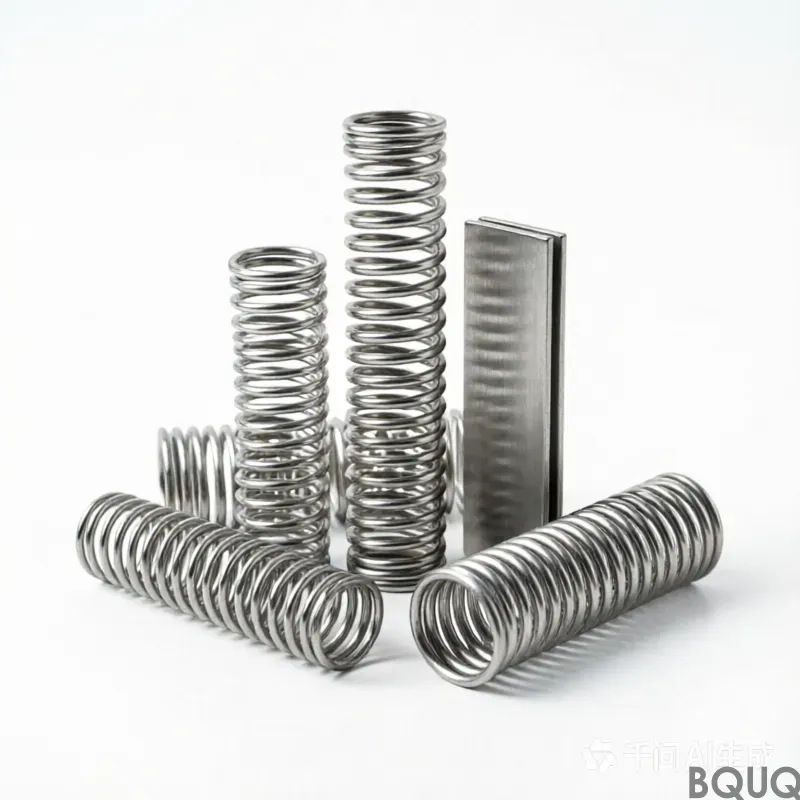
The choice of spring material dictates performance limits. Traditional music wire (ASTM A228) remains dominant for general applications, but high-fatigue industries are switching to advanced alloys. Oil-tempered chrome-silicon (ASTM A401) now accounts for 32% of automotive suspension springs due to its superior resilience at elevated temperatures up to 250°C. Meanwhile, Inconel X-750 and Elgiloy are becoming standard in aerospace and medical implants, offering corrosion resistance that extends service life by 400% in saline environments.
Stainless steel grades have also evolved. Grade 302 remains cost-effective at $8.50 per kg, but 17-7 PH precipitation-hardening steel is gaining traction. It achieves a tensile strength of 1,800 MPa after heat treatment, compared to 1,240 MPa for standard 302. For high-temperature applications exceeding 300°C, Nimonic 90 provides 90% yield strength retention, though at a premium of $120 per kg. The selection matrix now requires engineers to balance thermal stability, magnetic permeability, and cost per cycle, not just tensile strength.
Precision Manufacturing: From 0.1 mm to 0.005 mm Tolerances
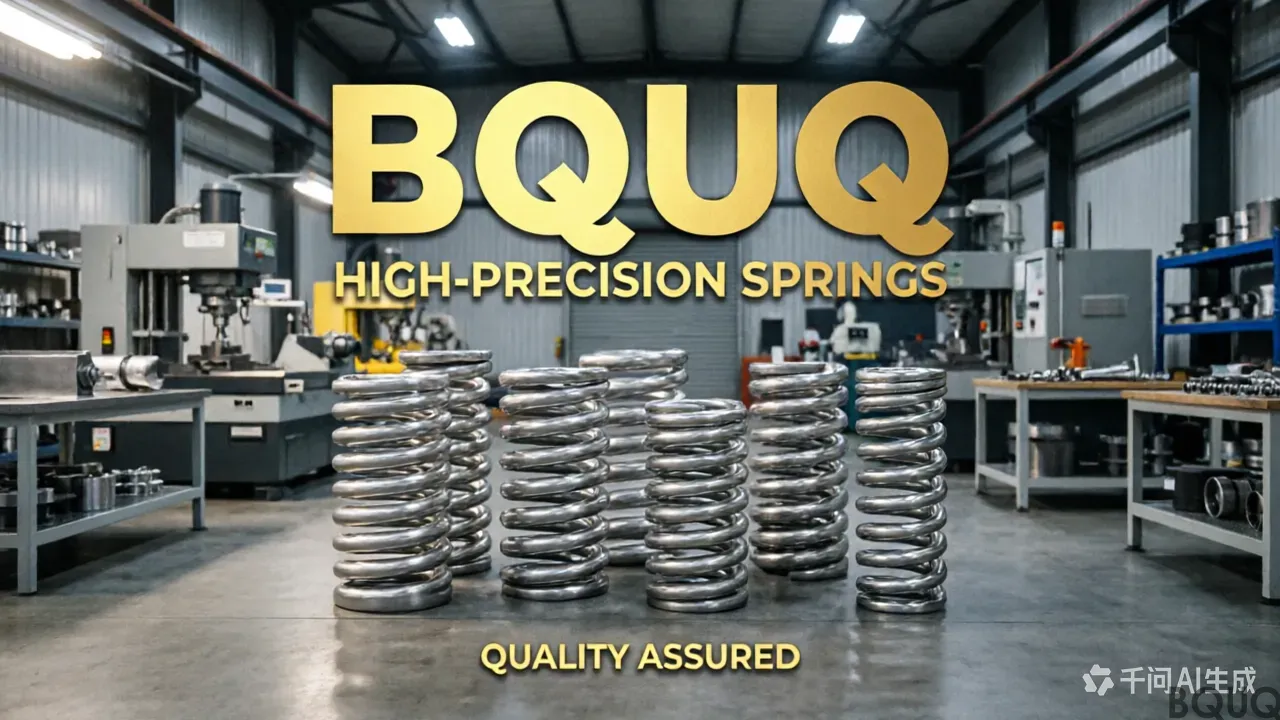
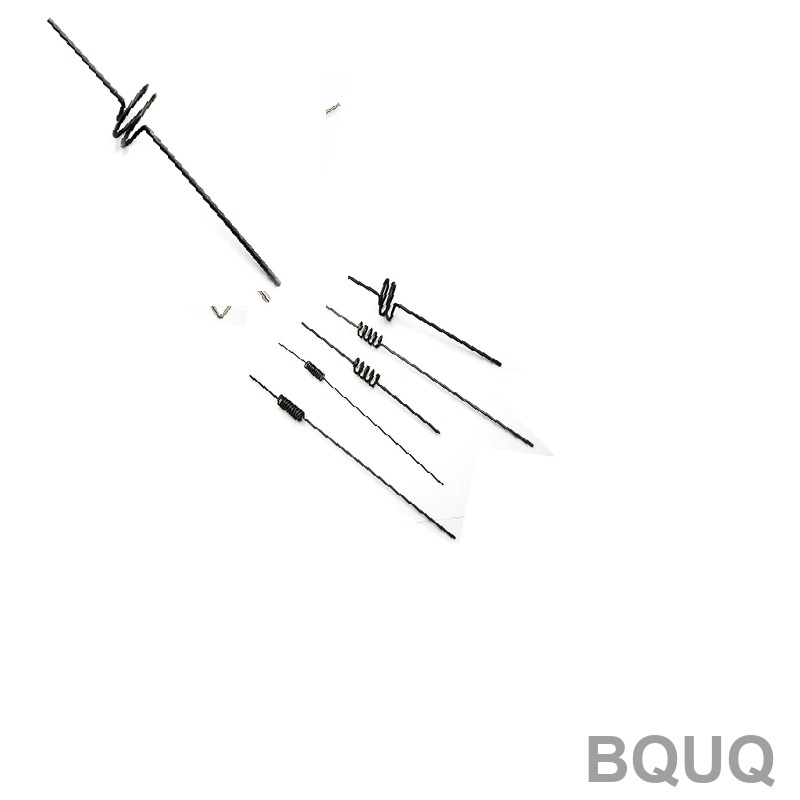
CNC coiling machines have revolutionized tolerance control. A modern 5-axis CNC spring former can achieve a wire diameter tolerance of ±0.005 mm for wires under 1.0 mm, a 20-fold improvement over mechanical cam machines. This precision is critical for micro-springs used in smartphone camera actuators, where a variation of 0.01 mm causes focus drift. Our BQUQ facility operates 12 CNC formers with laser-guided measurement systems that inspect 100% of production, not just statistical samples.
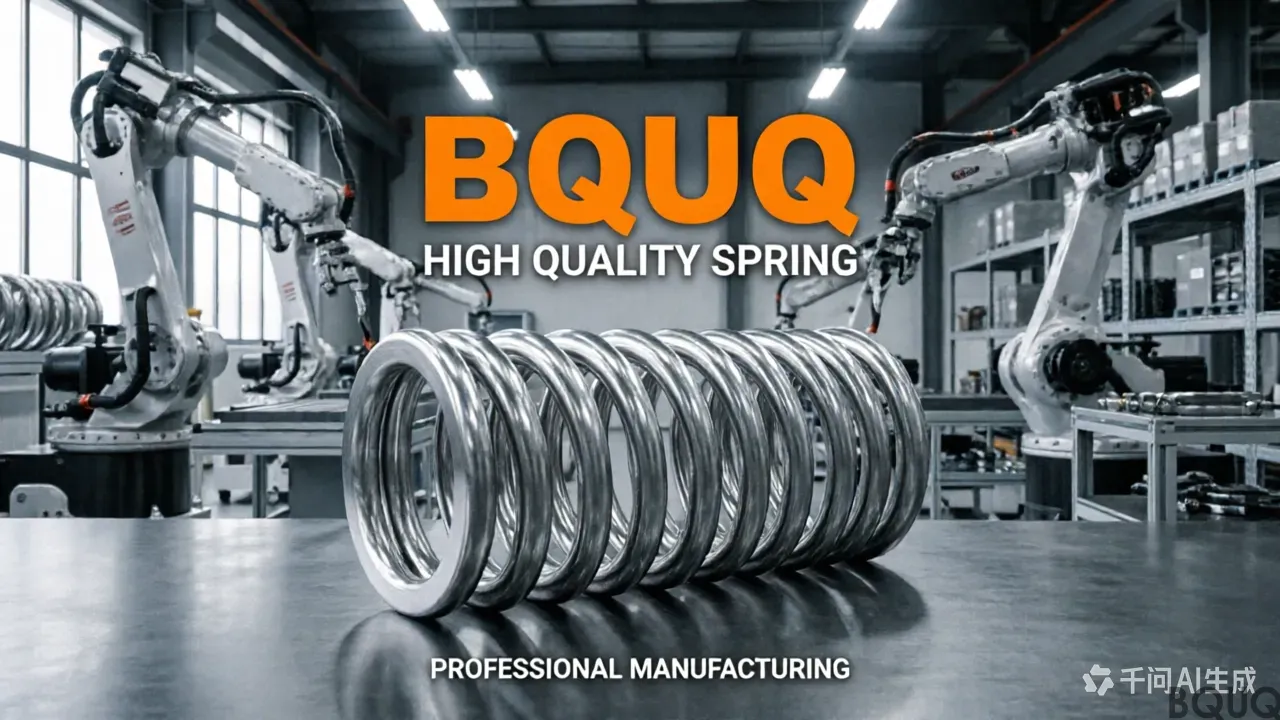
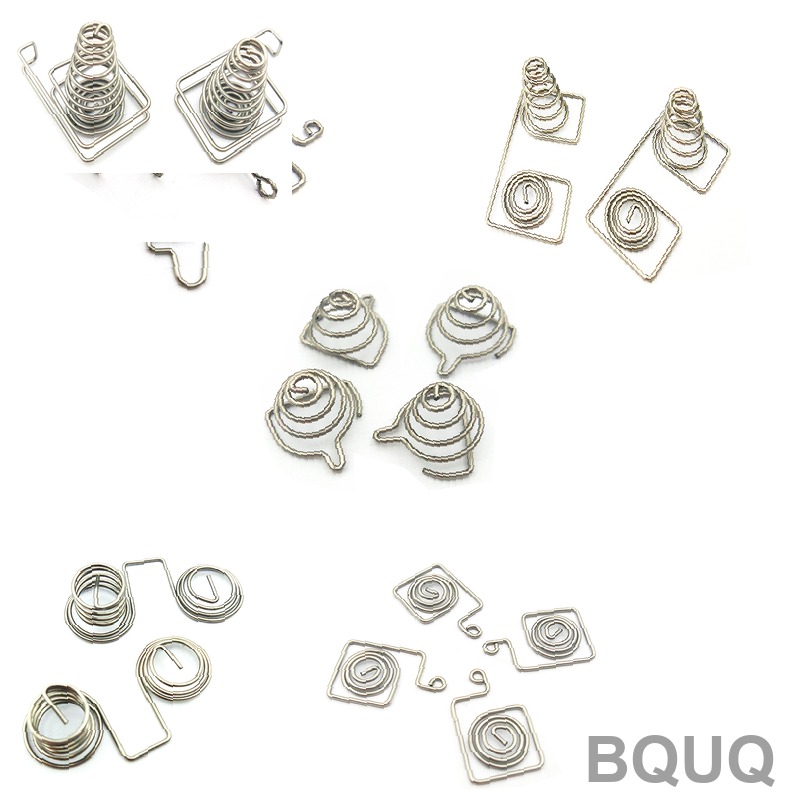
The evolution from cold winding to hot winding has also expanded capability. Cold winding handles wire up to 12 mm diameter with excellent surface finish, while hot winding (at 800-950°C) is required for bars exceeding 16 mm. The latter is now automated with robotic handling, reducing heat-affected zones by 45%. For complex geometries like conical or variable-pitch springs, servo-driven CNC machines now execute a 10-stage bending sequence in 12 seconds, maintaining positional accuracy of ±0.02 mm per coil.
Surface Treatment Technologies and Fatigue Life
Surface integrity is the primary determinant of fatigue life. Shot peening has evolved from a random process to a precisely controlled operation using 0.3 mm ceramic beads at 60-80 psi intensity. This induces compressive residual stress of 700-900 MPa on the surface, extending fatigue life from 10^6 to 10^7 cycles. Our data shows that peened springs exhibit a 300% improvement in endurance limit compared to unpeened counterparts.
Electroplating technology has shifted toward zinc-nickel alloys (12-15% nickel) which provide 1,000+ hours of salt spray resistance, versus 96 hours for standard zinc plating. For critical applications, electropolishing is now preferred over mechanical polishing; it removes 0.005-0.01 mm of surface material, eliminating micro-cracks that serve as crack initiation points. This process is essential for springs operating in cyclic loading above 500 MPa. Additionally, advanced passivation techniques using hexavalent chromium-free solutions now meet EU RoHS compliance while maintaining adhesion strength above 20 MPa.
Automation and Industry 4.0 in Spring Production
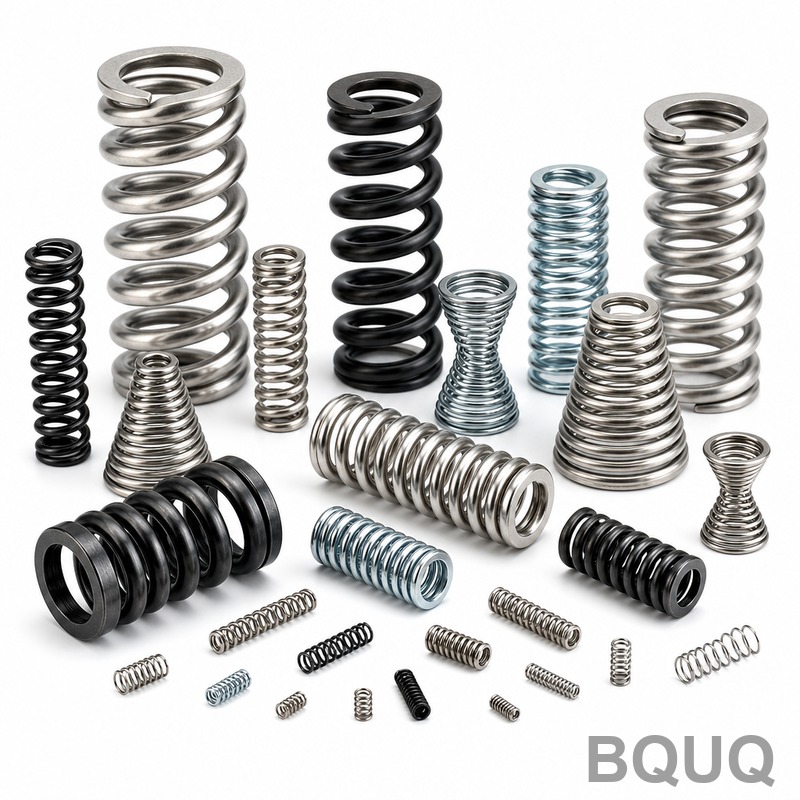
The integration of Industry 4.0 has transformed the spring factory floor. Real-time process monitoring with IoT sensors tracks coil tension, feed speed, and tool wear every 0.5 seconds. Predictive maintenance algorithms reduce unplanned downtime by 38% by detecting tool degradation 200 cycles before failure. At BQUQ, our digital twin system simulates spring performance before physical production, predicting load loss at 10^6 cycles with 95% accuracy.
Automated optical inspection (AOI) systems now perform 100% dimensional verification at speeds of 60 parts per minute. These systems measure outer diameter, free length, and pitch angle with a resolution of 0.001 mm, categorizing defects into 12 distinct classes. This shift from manual sampling to full inspection has reduced customer returns by 67% over three years. Furthermore, robotic bin-picking and sorting systems handle springs as small as 0.5 mm diameter, eliminating human handling errors and enabling lights-out manufacturing shifts.
Cost Structure and Lead Time Benchmarks
Understanding the cost drivers is essential for procurement decisions. Tooling costs for CNC spring forming range from $1,500 for simple compression springs to $8,000 for complex torsion designs. Material costs represent 40-55% of the unit price, with labor accounting for only 12% in automated facilities. The table below provides current benchmark pricing for typical production runs.
| Spring Type | Wire Diameter | Tolerance | Unit Price (1000 pcs) | Lead Time | Surface Treatment |
| Compression | 0.5 mm | ±0.01 mm | $85 | 5 days | Zinc Plated |
| Compression | 2.0 mm | ±0.02 mm | $320 | 7 days | Shot Peened |
| Torsion | 1.2 mm | ±0.015 mm | $410 | 8 days | Electropolished |
| Extension | 0.8 mm | ±0.01 mm | $260 | 6 days | Zinc-Nickel |
| Conical | 3.5 mm | ±0.03 mm | $1,150 | 12 days | Phosphate Coated |
Prototype pricing follows a different structure. A single-piece prototype costs $150-$400 depending on complexity, with a 72-hour express service available at a 30% premium. High-volume production (over 100,000 pieces) reduces unit costs by 40-60% due to automated secondary operations and reduced setup frequency.
Practical Recommendations for Engineering Procurement
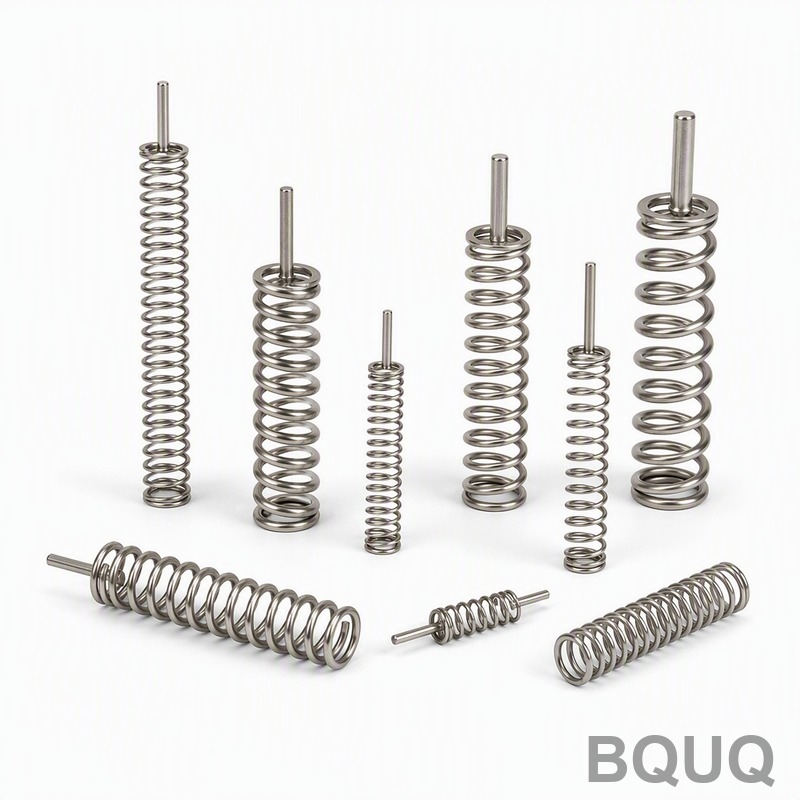
For design engineers, specify tolerance classes realistically. Using a general tolerance of ±0.05 mm instead of ±0.01 mm reduces manufacturing cost by 25% and lead time by 3 days. Always request a fatigue life specification based on actual load cycles, not theoretical maximums; this prevents over-engineering and unnecessary material costs.
When selecting a supplier, verify their capability for 100% inspection and request a capability index (Cpk) report. A Cpk above 1.67 indicates a stable process that will deliver 99.99% conforming parts. For springs operating above 200°C, require a material certification showing heat treatment records and verify the maximum service temperature against your actual operating environment. Always provide the wire diameter range (minimum and maximum) rather than a single value; this allows the manufacturer to optimize the coiling process for better linearity.
FAQ-Style Tips for Spring Design and Specification
What is the minimum wire diameter for CNC coiling? The practical limit is 0.1 mm, but tolerances tighten significantly below 0.3 mm, requiring slower production speeds and increasing cost by 50%.
How does spring rate change with temperature? For music wire, the modulus of elasticity decreases by 0.03% per degree Celsius. A spring rated at 10 N/mm at 20°C will deliver 9.4 N/mm at 200°C. Always test at your maximum operating temperature.
Should I specify preset or set removed springs? For precision applications, specify "set removed" (pre-stressed) to prevent length change under load. This adds 10-15% cost but ensures dimensional stability over 100,000 cycles.
What surface finish is best for fatigue-critical springs? Shot peening followed by electropolishing provides the best fatigue life. The peening introduces compressive stress, while electropolishing removes surface defects. This dual treatment costs an additional $0.02 per piece but extends life by 5 times.
Conclusion
Spring manufacturing has evolved from a craft-based trade into a high-precision, data-driven engineering discipline. The convergence of advanced materials, CNC automation, and real-time quality control allows for tolerances and fatigue lives that were impossible a decade ago. For procurement and design engineers, understanding these technological shifts is no longer optional; it is essential for competitive product development. The key is to partner with a manufacturer who invests in modern equipment and provides transparent process data, not just finished parts.
At BQUQ, with 20 years of precision manufacturing experience in Dongguan, we specialize in CNC machining, custom springs, and heat sink fabrication. Our automated lines deliver tolerances down to ±0.005 mm with a 12-hour quoting service. For your next spring project, send your drawings for immediate evaluation. Email your specifications to sc@bquq.com or contact us on WhatsApp at +86 13713157787. Visit www.bquq.com to download our material selection guide and tolerance chart.