Understanding Material Properties for Metal Stamping: A Guide for Design Engineers
Metal stamping success depends on matching material properties to the specific die, press, and part geometry. The most critical factors are yield strength, tensile strength, elongation, hardness, and springback behavior, which directly influence dimensional accuracy, tool wear, and production cost. For precision parts, selecting a material with a consistent thickness tolerance and grain direction is as important as choosing the correct alloy grade.
The Core Material Properties That Determine Stamping Performance
Four mechanical properties govern stamping behavior: yield strength (the stress at which plastic deformation begins), tensile strength (maximum stress before fracture), elongation (percentage of stretch before break), and hardness (resistance to indentation). For example, DC01 cold-rolled steel has a yield strength of 140-280 MPa and elongation of 28-40%, making it suitable for moderate forming. In contrast, 301 stainless steel in full-hard condition reaches 960 MPa yield strength but only 8% elongation, requiring larger bend radii to avoid cracking.
Springback, the elastic recovery after forming, is directly proportional to the yield strength-to-modulus ratio. For aluminum 5052-H32, this ratio is 0.004, while for DP980 advanced high-strength steel it is 0.012. This means DP980 will spring back three times more than 5052 for the same geometry, requiring die compensation of 2-5 degrees on bend angles.
Material Selection Criteria by Application and Tolerance
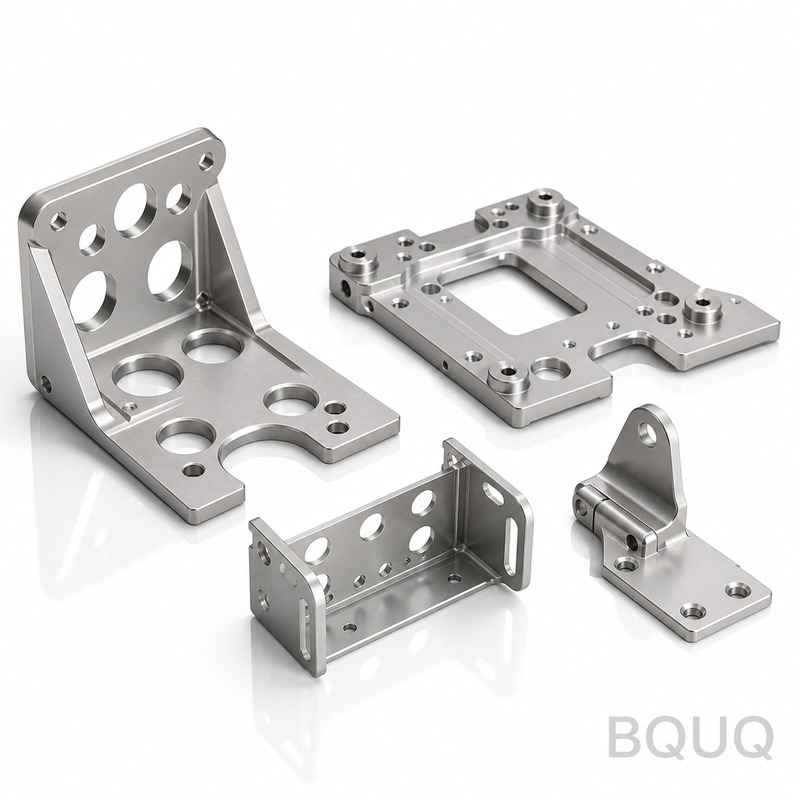
For electrical contacts and connectors, beryllium copper C17200 offers 1100-1380 MPa tensile strength with 20-30% elongation, maintaining conductivity at 22-25% IACS. For heat sinks, aluminum 6061-T6 provides a thermal conductivity of 167 W/m·K, but its 276 MPa yield strength limits deep drawing. Pure aluminum 1100-O, with 34 MPa yield strength, enables deeper draws but sacrifices structural rigidity.
When tolerances are tighter than plus/minus 0.05 mm, consider material thickness uniformity. Standard cold-rolled steel has a thickness tolerance of plus/minus 0.04 mm for 1.0 mm stock, while precision-rolled material achieves plus/minus 0.01 mm. The cost difference is approximately 18-25%, but the reduction in rejected parts often justifies the premium for high-volume runs exceeding 50,000 pieces.
Comparative Analysis of Common Stamping Materials
| Material | Yield Strength (MPa) | Tensile Strength (MPa) | Elongation (%) | Typical Thickness Range (mm) | Relative Cost Index | Best Application |
| DC01 Cold-Rolled Steel | 140-280 | 270-410 | 28-40 | 0.3-3.0 | 1.0 | Brackets, enclosures |
| SUS304 Stainless Steel | 205-310 | 520-720 | 40-60 | 0.3-4.0 | 2.3 | Corrosion-resistant parts |
| Aluminum 5052-H32 | 193 | 228-290 | 12-18 | 0.4-6.0 | 2.8 | Heat sinks, chassis |
| Copper C11000 | 69-280 | 220-310 | 10-45 | 0.1-3.0 | 4.5 | Busbars, terminals |
| Beryllium Copper C17200 | 900-1200 | 1100-1380 | 3-10 | 0.05-2.0 | 15.0 | Springs, connectors |
| DP980 Advanced Steel | 770-890 | 980-1080 | 8-12 | 0.5-3.0 | 1.8 | Structural automotive parts |
How Material Hardness Affects Tool Life and Edge Quality
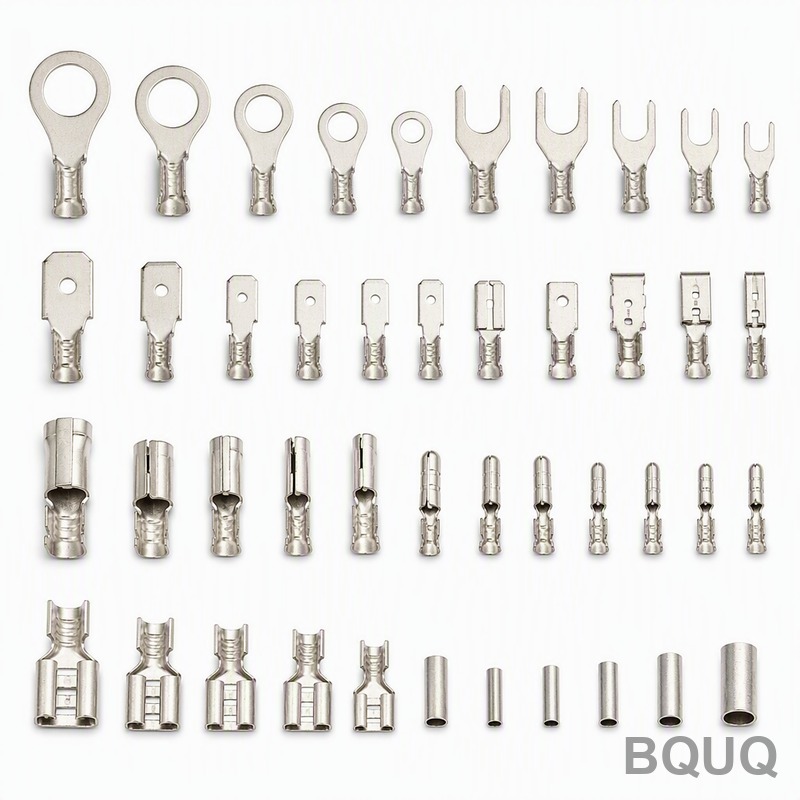
Tool wear in stamping is governed by the hardness differential between the die material and the workpiece. For every 50 HV increase in workpiece hardness, die life decreases by approximately 30% when using standard D2 tool steel (58-62 HRC). For example, stamping 1.5 mm thick SUS301 in half-hard condition (360 HV) yields 500,000 strokes per sharpening, while full-hard SUS301 (480 HV) reduces this to 350,000 strokes.
Edge quality, measured as burnish-to-roughness ratio, also depends on material ductility. With 6-8% clearance on die and punch, ductile materials like copper produce a 70% burnish zone, while high-strength steel yields only 40-50%. Increasing clearance to 10-12% improves edge quality for hard materials but increases burr height from 0.03 mm to 0.08 mm. For parts requiring burr-free edges, use fine-blanking with V-ring impingement, which requires materials with elongation above 15%.
Temperature Effects in Stamping Operations
Friction during stamping raises local temperatures at the shear zone to 200-400 degrees Celsius for steel, depending on speed and lubrication. At temperatures above 300 degrees Celsius, zinc-coated steels experience coating degradation, reducing corrosion resistance by up to 40%. For aluminum, temperatures above 150 degrees Celsius cause natural aging, increasing yield strength by 15-20% over 24 hours, which may change final dimensions by 0.02-0.04 mm.
Lubrication selection must match material chemistry. Chlorinated paraffin oils work well for stainless steel but cause stress corrosion cracking in copper alloys. For aluminum, use low-viscosity oils with extreme pressure additives to prevent galling. In high-speed stamping above 200 strokes per minute, water-soluble lubricants with 5-8% concentration maintain consistent film strength while cooling the die.
Cost Impact of Material Selection on Stamping Projects
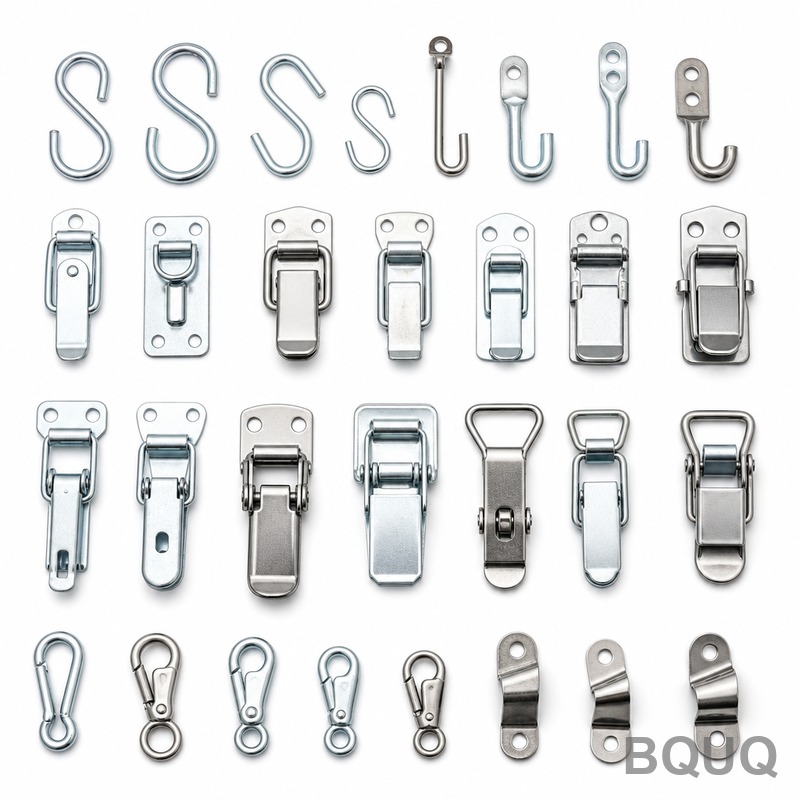
Material cost constitutes 45-60% of total stamped part cost, often exceeding tooling amortization. For a typical 100,000-piece run of a 50 mm by 30 mm bracket, DC01 material costs approximately 0.08 USD per piece, while SUS304 costs 0.19 USD per piece. However, secondary operations such as deburring, plating, or heat treatment can add 0.02-0.10 USD per piece depending on material response.
The total cost of ownership includes scrap rate, which is higher for materials with inconsistent properties. For example, 5000-series aluminum has a batch-to-batch yield strength variation of plus/minus 15 MPa, causing springback variation of plus/minus 0.3 degrees. This requires more frequent die adjustment, adding 2-3 hours of setup time per batch. Using certified material with traceability ensures consistent properties but adds 8-12% to raw material price.
Practical Recommendations for Design Engineers
For stamped parts with bend radii smaller than 1.5 times material thickness, select materials with elongation above 25% to prevent cracking. For example, 5052-H32 aluminum has 12% elongation and requires a minimum bend radius of 2.5 times thickness, while 5052-O with 25% elongation can achieve 1.0 times thickness. Specify grain direction on the drawing when forming critical bends, as longitudinal grain provides 15-20% better bendability than transverse grain.
When tight flatness tolerances below 0.15 mm are required, specify stress-relieved material or include a coining operation. Coining with 10-15% thickness reduction at critical areas reduces residual stress and improves flatness stability. For high-volume production above 500,000 pieces, consider using progressive dies with in-die sensing to monitor material thickness variation and adjust press tonnage automatically.
FAQ-Style Tips for Common Stamping Material Issues
Question: Why does my aluminum part show orange peel after forming? Answer: This occurs when the material has large grain size above 50 microns. Specify material with grain size ASTM 7 or finer, which requires controlled annealing temperatures below 350 degrees Celsius for 5052 alloy.
Question: How do I reduce springback in high-strength steel? Answer: Use a coining process that compresses the bend area by 5-8% of material thickness. This introduces compressive residual stress that counteracts elastic recovery. Additionally, increase die compensation by 2-4 degrees and perform bottoming at the end of the stroke.
Question: What is the best material for a stamped spring contact? Answer: Beryllium copper C17200 in half-hard condition (HT) provides 1100 MPa tensile strength with 20% elongation, offering excellent fatigue life exceeding 10 million cycles. For cost-sensitive applications, use phosphor bronze C5210 with 780 MPa tensile strength at 60% of the cost.
Conclusion
Material selection in metal stamping is a multi-variable optimization problem balancing formability, strength, cost, and secondary processing requirements. The data presented in this guide provides a baseline for initial selection, but prototype validation is essential because real stamping conditions involve complex stress states that standard material data sheets do not fully capture. Always verify thickness tolerance, grain direction, and surface finish with your material supplier before committing to high-volume production.
For your next stamping project requiring precision tolerances, BQUQ provides free material selection consultation and engineering feedback within 12 hours of receiving your drawings. Our 20 years of experience in CNC machining, metal stamping, springs, and heat sinks ensures manufacturable designs at competitive pricing.
Email: sc@bquq.com WhatsApp: +86 13713157787 www.bquq.com