What Materials Can Be Used in Metal Stamping? Full Guide to Steel, Aluminum, Copper
Metal stamping accommodates a wide range of ductile metals, but the practical choices for production grade components are carbon steel, stainless steel, aluminum, copper, and brass. The selection depends on required tensile strength, corrosion resistance, electrical conductivity, and cost per kilogram, with typical stamping tolerances ranging from ±0.05 mm for thin gauge steel to ±0.13 mm for soft aluminum.
Material Selection Criteria for Stamping Operations
The stamping process—whether progressive die, deep drawing, or fine blanking—imposes specific mechanical demands on the raw material. The critical parameters are yield strength, elongation percentage, and work hardening rate. For a die to produce consistent parts without cracking or excessive springback, the material must exhibit uniform elongation of at least 15% for simple bends and 25% for deep drawn cups. BQUQ's engineering team evaluates these factors against the part geometry, press tonnage (typically 25 to 400 tons in our facility), and required production volume.
Material thickness is another governing factor. Precision stamping dies are built to a specific gauge, and variations beyond ±0.03 mm can cause burr formation or die wear. For high volume runs, we recommend purchasing material with a guaranteed thickness tolerance of ±0.05 mm for steel and ±0.04 mm for aluminum to maintain dimensional stability across millions of strokes.
Steel Grades: Carbon Steel and Stainless Steel
Low carbon steel, specifically SAE 1008 and 1010, dominates the stamping industry due to its low cost and excellent formability. These grades have a yield strength of approximately 210 MPa and elongation of 30-40%, making them ideal for brackets, enclosures, and automotive structural parts. For components requiring higher strength without heat treatment, high strength low alloy (HSLA) steels like A572 Grade 50 offer yield strengths up to 345 MPa, though their reduced elongation (around 18%) requires more careful die radii design to prevent cracking.
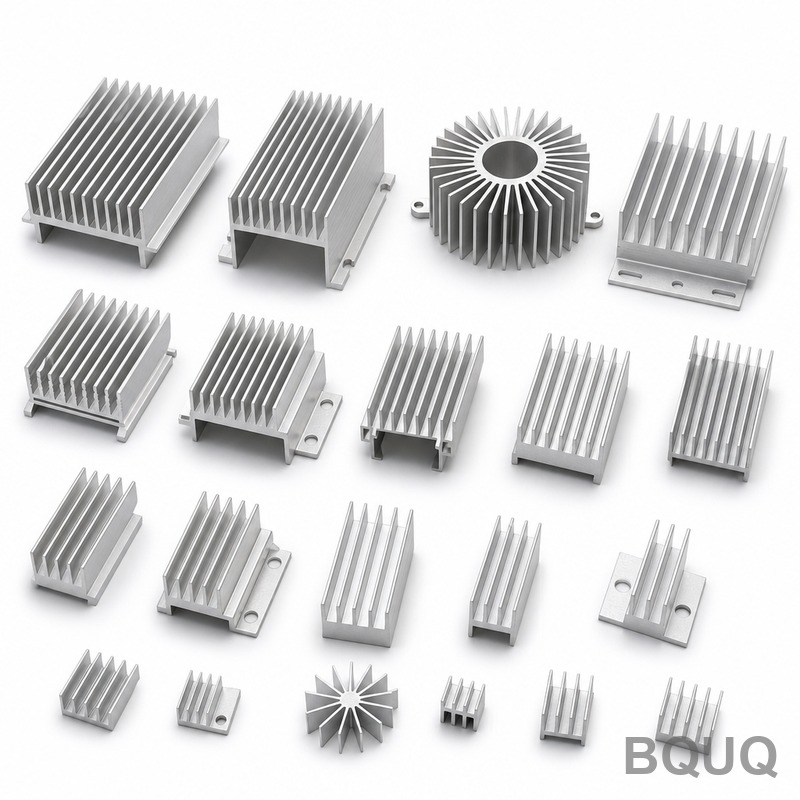
Stainless steel grades 304 and 301 are used when corrosion resistance or hygiene is critical. Type 304 offers good formability with 40% elongation but work hardens rapidly, necessitating higher press tonnage and frequent die polishing. Type 301, available in full-hard condition, reaches tensile strengths of 1240 MPa for spring applications. The price differential is significant: cold rolled carbon steel costs approximately 0.70 USD per kg, while 304 stainless steel ranges from 2.80 to 3.50 USD per kg depending on nickel market fluctuations.
Aluminum Alloys: Formability vs. Strength
Aluminum stamping is growing because of lightweighting in electric vehicles and consumer electronics. The most stampable alloys are 5052 and 3003. Alloy 5052 offers moderate strength (yield 193 MPa) with excellent corrosion resistance and is the default for battery enclosures and heat sink chassis. Alloy 3003 is softer (yield 145 MPa) but cheaper and easier to deep draw, often used for cookware and automotive heat shields. For structural parts, alloy 6061 is occasionally stamped, but its lower elongation (10-12%) makes it prone to cracking in tight radii; we typically machine 6061 instead of stamping it.
Aluminum's lower density (2.7 g/cm³ vs. 7.85 g/cm³ for steel) does not reduce stamping cost because the material price per kg is higher (2.20 to 2.80 USD per kg for 5052) and the die wear rate is three times higher due to aluminum's abrasive oxide layer. Tooling for aluminum requires D2 or M2 steel with TiN coating to achieve die life above 500,000 strokes without reconditioning.
Copper and Brass: Electrical and Thermal Conductivity
Copper alloys are selected for electrical terminals, connectors, and heat sink components where conductivity is non-negotiable. Pure copper (C11000) has electrical conductivity of 101% IACS but is expensive (8.50 USD per kg) and gummy, causing galling on the die surface. For stamping, we recommend C11000 only for flat washers or simple bends. For complex connector geometries, beryllium copper (C17200) or phosphor bronze (C51000) offer higher strength with acceptable conductivity.
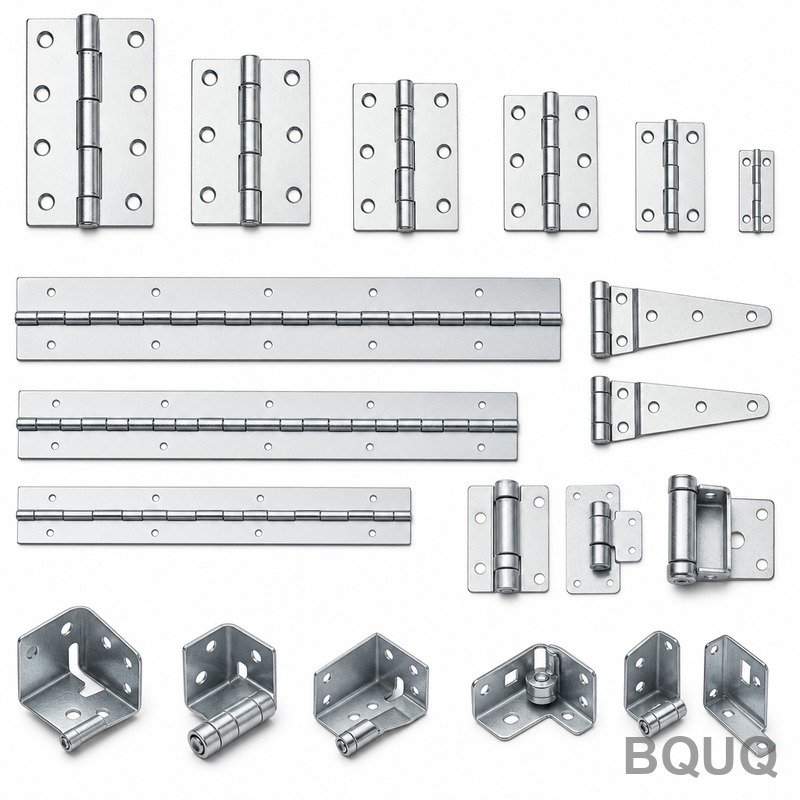
Brass (C26000, 70% copper, 30% zinc) is a cost-effective alternative for spring contacts and terminals. It offers good corrosion resistance, a yield strength of 150 MPa, and costs about 5.20 USD per kg. However, brass is prone to stress corrosion cracking if stamped with excessive residual stress; we recommend a stress relief anneal at 250°C for 30 minutes after forming if the part operates in humid environments.
Material Comparison Table with Key Specifications
| Material | Yield Strength (MPa) | Elongation (%) | Electrical Conductivity (%IACS) | Relative Cost (USD/kg) | Typical Stamping Tolerance (mm) | Recommended Max Thickness (mm) |
| Cold Rolled Steel 1008 | 210 | 35 | 15 | 0.70 | ±0.05 | 6.0 |
| Stainless Steel 304 | 290 | 40 | 2.5 | 3.10 | ±0.08 | 4.0 |
| Stainless Steel 301 Full Hard | 965 | 8 | 2.0 | 3.40 | ±0.10 | 2.5 |
| Aluminum 5052 | 193 | 20 | 35 | 2.50 | ±0.13 | 5.0 |
| Aluminum 3003 | 145 | 25 | 40 | 2.20 | ±0.13 | 5.0 |
| Copper C11000 | 70 | 45 | 101 | 8.50 | ±0.05 | 3.0 |
| Brass C26000 | 150 | 50 | 28 | 5.20 | ±0.08 | 3.0 |
| Phosphor Bronze C51000 | 330 | 35 | 15 | 7.80 | ±0.06 | 2.0 |
Cost Drivers and Lead Time Considerations
Material cost represents 40-60% of the total stamped part price, so the choice of alloy directly impacts your piece price. For example, a 50mm x 50mm bracket stamped from 1.0mm steel costs approximately 0.12 USD in material, while the same part in 5052 aluminum costs 0.35 USD. Tooling cost also varies: a progressive die for steel costs 15,000 to 30,000 USD, while the same die for aluminum requires special coatings and costs 20,000 to 35,000 USD.
Lead times for material procurement are often the bottleneck. Cold rolled steel and 5052 aluminum are standard stock items with 3-5 day delivery in Dongguan. Stainless steel and copper alloys may require 10-15 days from the mill. For prototype runs, we maintain inventory of common gauges (0.5, 1.0, 1.5, 2.0 mm) in all five material families to start tooling trials within 48 hours of drawing approval.
Practical Recommendations for Material Selection
For structural brackets and chassis parts where weight is not critical, specify SAE 1008 steel with a zinc plating of 8 microns for corrosion protection. If the part must be lighter than 200 grams and operates below 150°C, use 5052 aluminum with a clear anodize. For electrical contacts carrying more than 5 amps, choose C17200 beryllium copper despite its higher cost because it resists fatigue and maintains low contact resistance. Avoid pure copper for any part with a bend radius smaller than 1x material thickness, as it will tear.
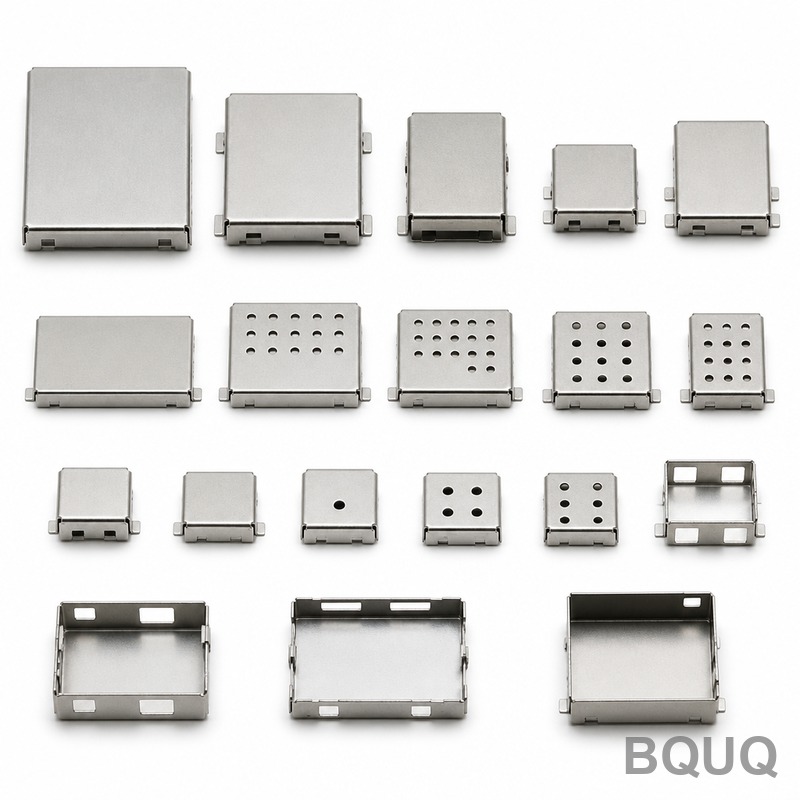
Always consider the finishing process when selecting material. Steel parts require plating or powder coating, adding 0.05 to 0.15 USD per part. Aluminum can be anodized for 0.10 USD per part, but this increases the effective thickness by 0.005 mm which affects tight tolerances. Stainless steel and brass require no coating, saving secondary costs but increasing raw material costs. For high volume production above 100,000 parts, we recommend a DFM review to ensure the chosen material can be stamped within your tolerance at a consistent cycle rate of 60-120 strokes per minute.
FAQ-Style Tips for Engineers
What is the cheapest material to stamp? Cold rolled steel 1008 is the lowest cost per kilogram and has the highest die life, making it the most economical choice for non-corrosive environments. What material resists heat best for a heat sink? Aluminum 5052 maintains structural integrity up to 200°C, but for sustained operation above 150°C, consider copper C11000 which has three times the thermal conductivity of aluminum. Can titanium be stamped? Yes, but only Grade 2 commercially pure titanium, which has 28% elongation; it requires 2-3 times the press tonnage of steel and costs 25 USD per kg, so it is only used for aerospace or medical implants. What about galvanized steel? Galvanized steel is stampable but the zinc coating flakes at the shear edge, causing die wear and coating defects; we recommend stamping bare steel and applying zinc plating after forming.
Conclusion and Next Steps
The optimal stamping material balances mechanical properties, cost, and downstream processing requirements. Steel remains the workhorse for structural parts, aluminum leads for lightweighting, and copper alloys are mandatory for electrical and thermal applications. Every alloy has specific die design and tonnage requirements that affect your tooling budget and part quality. For your specific application, consider the operating temperature, required tolerance, and annual volume before finalizing the material grade.
At BQUQ, we have stamped parts from all eight materials listed above across 20 years of production in Dongguan. Our engineering team can review your drawing, suggest the most cost-effective material, and provide a firm quote within 12 hours. Send your 2D or 3D files to sc@bquq.com or contact us on WhatsApp at +86 13713157787. Visit www.bquq.com to download our material selection guide and request a sample kit with stamped coupons of each alloy.
Related Articles
- Springback Compensation in Metal Stamping: Design & Simulation Guide
- Multi-Physics Coupled Failure Mechanisms and Systematic Prevention Strategies in Stamping Processes
- custom stamped metal power contact spring battery clip factory
Frequently Asked Questions
What materials can be used for metal stamping, and what are the typical tolerances?
Common production-grade materials include carbon steel, stainless steel, aluminum, copper, and brass. Typical stamping tolerances range from ±0.05 mm for thin gauge steel to ±0.13 mm for soft aluminum, depending on material and part geometry.
What material thickness tolerance is recommended for high-volume stamping runs?
For high-volume runs, we recommend purchasing material with a guaranteed thickness tolerance of ±0.05 mm for steel and ±0.04 mm for aluminum. Variations beyond ±0.03 mm can cause burr formation or die wear, so precise gauge control is critical for dimensional stability across millions of strokes.
Which steel grades are best for stamping, and what are their key properties?
Low carbon steel SAE 1008 and 1010 are ideal for brackets and automotive parts, with yield strength around 210 MPa and elongation of 30-40%. For higher strength without heat treatment, HSLA steels like A572 Grade 50 offer yield up to 345 MPa but need careful die radii design due to ~18% elongation.
What aluminum alloys are recommended for stamping, and how do they compare?
Alloy 5052 offers moderate strength (yield 193 MPa) with excellent corrosion resistance, ideal for battery enclosures and heat sink chassis. Alloy 3003 is softer (yield 145 MPa) but cheaper and easier to deep draw, often used for cooling components. Both are common for lightweighting in EVs and electronics.