Stamped washers and shims: flatness, burr, tolerances to 0.05 mm, material choice and cost per 1000. BQUQ, an ISO9001 stamping factory in Dongguan.
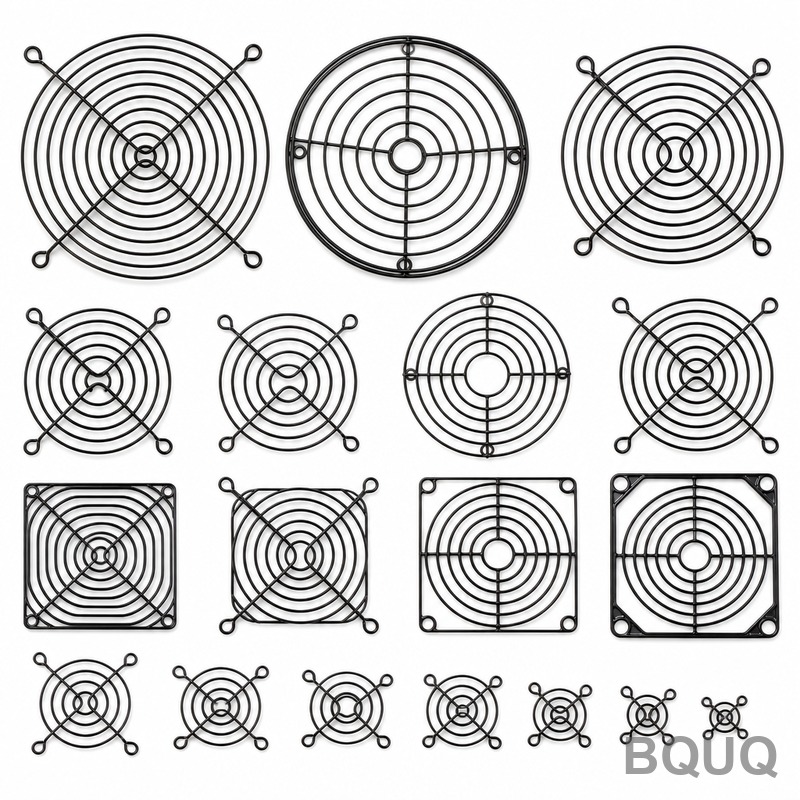
Stamped Washers and Spacers: Precision in Thin Parts
Short answer: a stamped washer or spacer is a flat blank with a hole, produced by a punch and die at tolerances of ±0.05 mm on diameter and, with the right tooling and process care, flatness of 0.05 mm or better on thin material. The per-piece cost is fractions of a cent to a few cents at volume — typically 10–50× cheaper than machining the same ring. What separates a good stamped washer from a bad one is not the hole position; it is burr height, flatness, and edge condition, and those are controlled by die clearance, strip flatness and secondary deburring.
Engineers rarely think about washers until one fails. A burr on a spacer shaves the wire insulation it sits against; a warped shim turns a precision bearing preload into guesswork; a washer with a shifted hole lets a screw shoulder drop where it should seat. Stamping makes these parts in huge volumes because they are cheap, but "cheap" only holds if the process is controlled. This guide covers what tolerances are realistic, how burr and flatness are actually managed, which materials work, and when a washer should not be stamped at all.
What Tolerance Can a Stamped Washer Really Hold?
Stamping is not machining. The blank is punched, not cut, so the edge has a characteristic roll-over on one side and a burr on the other. Production stamping holds hole and OD diameters to roughly ±0.05 mm on thin materials with a well-maintained die — comparable to the drawing conventions in our metal stamping tolerances guide. Tighter than that pushes you into fine blanking or secondary machining, and the price curve turns vertical.
| Feature | Typical stamped tolerance | Better process if you need tighter |
|---|---|---|
| Blank OD and hole ID | ±0.05 mm | Fine blanking (±0.01–0.02 mm) or CNC turning |
| Hole-to-hole center distance | ±0.05 mm | Fine blanking, or machining after stamping |
| Thickness | Coil tolerance (±0.02–0.05 mm typical) | Ground strip, or machine the faces |
| Flatness | 0.05–0.15 mm depending on thickness | Coining/striking step, or lapping for shim sets |
Thickness is the feature stamping does not change: you inherit the coil's gauge tolerance. If your design needs a precise 0.500 mm spacer, buy precision-rolled strip and check it on receipt, or spec a coined (struck) washer where a final coining operation sets thickness and flatness together. Coining adds a die station and cost, but it is the standard way to make stamped shims that actually measure what the drawing says.
Burr: The Hidden Defect That Causes Field Failures
Every punched edge carries a burr on the die side, normally 5–15% of material thickness on a well-set die, rising as the die wears. A 0.3 mm burr on a 1 mm washer does not sound like much, but in a connector stack it can cut a magnet wire, hold a mating face off by more than its tolerance, or embed into a soft aluminum housing under clamp load.
Burr control is a maintenance discipline, not a one-time setup: die clearance (typically 4–8% of material thickness per side for steel), punch sharpness, and alignment all affect burr height, and a progressive die needs regular sharpening intervals to stay in spec. If the application is sensitive — thin insulation, sealing faces, anything that moves — specify a maximum burr height on the drawing (for example 0.05 mm max) and add a deburring step. Options include vibratory finishing, tumbling, and brushing, each adding roughly $1–5 per 1000 pieces depending on part size and batch. For very thin, burr-critical parts, discuss the trade-off early: a source factory should tell you when deburring cost rivals the part cost and a different edge design makes more sense.
Flatness and Warp: Why Thin Washers Curl
Thin flat parts curl for a simple reason: stamping cold-works the material unevenly. The punched edge is work-hardened, the strip carries internal stress from rolling, and a wide thin blank has little stiffness to resist it. A 0.2 mm thick washer 20 mm across can come off the press visibly dished, especially after piercing creates unbalanced stresses around the hole.
| Thickness | Typical flatness after basic stamping | How to improve it |
|---|---|---|
| 0.1–0.3 mm | 0.10–0.20 mm warp possible | Coining station, straightening rolls, or thicker material |
| 0.3–0.8 mm | 0.05–0.10 mm typical | Die design, strip tension control, occasional coining |
| 0.8 mm+ | 0.05 mm or better achievable | Standard practice holds well on thicker stock |
Two levers fix warp. The first is die-side: balanced blanking geometry, correct clearance, and a coining or sizing station that strikes the part flat in the same stroke. The second is strip-side: coil straightening, and awareness that a stressed coil from a mill can stamp flat parts that curl as internal stress redistributes — which is why first-article flatness checks happen after a day of storage, not at the press. If flatness is a functional requirement, write it on the drawing with a measurement method, because "flat" measured on a surface plate and "flat" under your clamp load are different numbers.
Materials for Stamped Washers and Spacers
Washer material follows function: corrosion, strength, galvanic compatibility and cost. The good news is that almost anything that comes in coil can be stamped.
| Material | Typical uses | Notes |
|---|---|---|
| Low-carbon steel (DC01/SPCC) | General spacers, structural washers | Cheap, often zinc-plated |
| Spring steel (C67S/65Mn) | Lock washers, spring shims | Needs plating against rust |
| Stainless 301/304/430 | Outdoor, food, corrosive duty | 301 hard for spring function |
| Brass / phosphor bronze | Electrical, terminals, non-magnetic | Pairs with copper conductors |
| Aluminum 5052/6061 | Lightweight spacers, heat paths | Soft — watch burr and thread tear-out |
| Copper | Busbar and thermal stacks | Soft, conductive, costs more |
For electrical stacks, match the washer to the conductor: brass or phosphor bronze against copper terminals avoids galvanic corrosion and keeps contact resistance predictable. For bolted aluminum stacks, use aluminum or zinc-plated steel washers with compatible coating rather than bare stainless, which can corrode the aluminum over time in humid service. When strength matters, remember a stamped washer fails by crushing or cracking under the bolt head, not by tension, so hardness and flatness matter more than tensile grade.
Measuring the Three Numbers That Matter
A washer drawing should call out three measurements, and each one needs a defined method or the inspection report is meaningless. Flatness is measured on a surface plate with the part resting on its natural contact points, using feeler gauges or a dial indicator over a stated area — a 25 mm washer that is flat within 0.05 mm over its full face can still rock on a screw if the spec was checked only at the center. Burr height is measured at the punched edge with an optical comparator or a micrometer on the die side, and it should be checked at several points around the hole because wear is rarely even. Thickness is averaged from multiple points with a ball-anvil micrometer, not a single reading at the rim, since coil gauge variation and coining marks change local values. Concentricity of the hole to the blank OD is measured on a simple pin-and-dial fixture; on thin parts it is influenced by die alignment more than by the punch itself.
Batch control follows the same logic as any stamping inspection plan: a full dimensional first-article report, then sampling per an agreed AQL level on every production run. For washers that get coined, the coining station should be verified every shift, because a worn coining die drifts thickness and flatness together long before either number fails loudly. Specify the method on the drawing or in the purchase order, and the supplier can build the check into the process instead of discovering the disagreement at your incoming inspection.
Cost: Why 10,000 Washers Are Cheaper Than One Machined Ring
Machining a washer from bar stock spends most of the machine time cutting air — the chip volume is tiny compared to the turning cycle, and you pay for the whole cycle. Stamping produces one washer per press stroke at thousands of strokes per hour, so the comparison is dramatic at any volume above a few hundred pieces.
| Route | Tooling (indicative) | Per-part cost at 10,000 pcs | Lead time to first parts |
|---|---|---|---|
| Stamping, simple flat washer | $500–3,000 | $0.005–0.03 | 2–4 weeks |
| Stamping, progressive + coining | $3,000–10,000 | $0.02–0.10 | 4–8 weeks |
| CNC turning from bar | None (setup only) | $0.50–3.00 | Days |
| Laser cutting from sheet | None (program) | $0.05–0.50 (plus sheet waste) | Days |
The crossover is roughly a few hundred to a thousand pieces: below that, machining or laser cutting avoids die cost; above that, stamping wins by an order of magnitude. A washer that costs $0.02 stamped and $1.20 turned pays for a $3,000 die at around 2,500 pieces — and every piece after that is nearly free. If your volume is uncertain, order prototypes machined or laser-cut, validate the design, then commit to the die, an approach many buyers use for custom hardware with our stamping line in Dongguan. When quantities are too small for a dedicated die but too large for hand-made parts, ask about multi-part family tooling — several washer sizes blanked in one die or one progression can share the tooling cost across your whole BOM.
When a Washer Should Not Be Stamped
Stamping is not always the answer. If the part needs a closed tolerance bore for a precision shaft, a ground ID, square and parallel faces for metrology use, or a thickness tolerance tighter than strip gauge control, a machined or fine-blanked part is the honest recommendation. If the quantity is a one-off repair batch, laser cutting a stack of blanks is faster and cheaper than tooling. And if the washer must carry a controlled preload like a disc spring, that is a spring engineering problem, not a flat washer problem — the geometry, stacking and heat treatment belong to spring design. A good supplier says so before quoting, because the cheapest process that meets the drawing is the one that stays cheap across your product's life, not just across the purchase order.
Frequently Asked Questions
Q: What tolerance can you hold on a stamped washer?
A: Production stamping holds blank and hole diameters to about ±0.05 mm with a well-maintained die on thin material. Tighten beyond that with fine blanking, which reaches roughly ±0.01–0.02 mm, or machine the critical features after stamping. Thickness is not set by stamping — it follows the coil gauge tolerance unless you add a coining step.
Q: How do I control burrs on stamped washers?
A: Specify a maximum burr height on the drawing, for example 0.05 mm, and add a deburring operation such as tumbling or brushing. Burr grows as the die wears, so regular punch and die sharpening is the real control; a serious supplier tracks burr height in its stamping quality checks and sharpens on a schedule, not after rejects appear.
Q: Why are stamped washers cheaper than machined ones?
A: Because stamping makes one part per press stroke at high speed while machining removes material one pass at a time. A stamped washer typically costs $0.005–0.03 at volume versus $0.50–3.00 turned. The die is the upfront cost, and it pays back once volume passes roughly a few hundred to a thousand pieces.
Q: Can you make shims in stepped thicknesses?
A: Yes. Stamped shims can be coined to set flatness and thickness, and multi-level spacers can be drawn or formed with progressive tooling. For precise stepped gaps, discuss the stack-up with the stamper — coining a boss or forming a step usually costs less than assembling multiple loose shims.
Q: What thickness range suits stamping for washers?
A: Thin coil stock from about 0.05 mm up to 3–4 mm is routinely stamped; most washers and shims fall in the 0.1–2.0 mm band. Very thin material needs burr and flatness care, and thick material needs heavier presses and may shift toward flame-cut or machined blanks for small quantities.
Related Resources
- Metal stamping tolerances: what a die actually holds — realistic callouts for flat and formed stamped parts.
- Precision metal stamping services in China — washers, shims, terminals and brackets from progressive dies.
- About BQUQ — an ISO9001-certified Dongguan factory with stamping, CNC, spring and heat sink lines under one roof.
- Contact us — send the washer drawing and quantity for a quote within 12 working hours.
Authored by the BQUQ Engineering Team. BQUQ is an ISO9001-certified source factory in Dongguan, China, running CNC machining, metal stamping, custom springs, heat sink and collet lines under one roof. Send drawings to sc@bquq.com or WhatsApp +86 13713157787 for a quote within 12 working hours. www.bquq.com