800G optical transceiver heat sink case: 6063-T5 extrusion plus CNC finishing, 0.8mm fins, base flatness ≤0.05mm, black anodizing, die in 15-20 days and first batch in 5 weeks. BQUQ heat sink manufacturer.
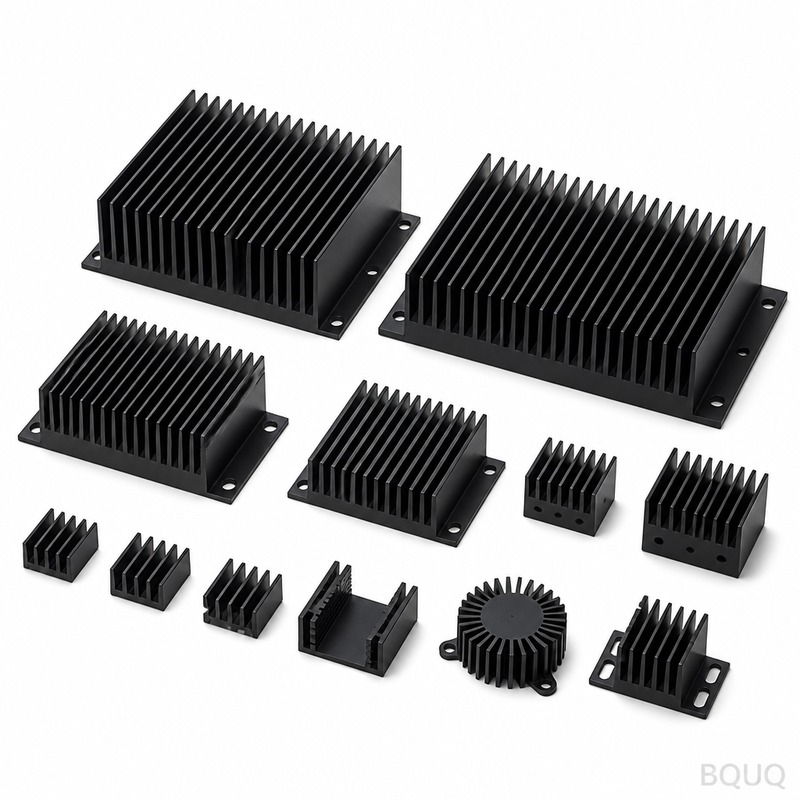
800G Optical Transceiver Heat Sink: Extruded 6063-T5 + CNC Finishing, 0.05mm Flatness, 5-Week Delivery
As data centers move to 400G and 800G, optical transceiver power keeps climbing while the heat sink keeps shrinking: denser fins, flatter bases, blacker surfaces. If base flatness is off by 0.05mm, heat stops transferring from the chip and the module temperature blows past its limit. A heat sink looks like a simple aluminum part - in reality it is a relay race between extrusion die design, CNC finishing and surface treatment.
Project Background & Challenge
An optical communications manufacturer was qualifying a heat sink for an 800G transceiver: 6063-T5 extruded aluminum, 0.8mm fin thickness, base flatness ≤0.05mm against the heat source, black anodized finish for radiative cooling, tens of thousands of pieces a year, and a tight program window - 5 weeks from die making to first delivery.
The difficulties: dense fins make extrusion flow hard to balance; flatness depends on CNC finishing where even slight clamping distortion ruins the part; and anodizing shifts dimensions by microns, so the tolerance chain needs allowance built in from the start.
BQUQ Process Solution
Extrusion & Die
The extrusion die is designed from the drawing with flow balanced through port geometry and bearing design; after tryout, the die is corrected based on fin fill before volume production. 6063-T5 is artificially aged after extrusion to balance hardness and thermal conductivity.
CNC Finishing & Surface Treatment
The base is finish-milled on a vacuum chuck, with the base face and mounting holes completed in one setup; flatness is re-checked on a granite surface plate with feeler gauges. Parts are then black anodized to 8-12μm coating thickness, with visual and dimensional checks on every part before shipping.
Key Specifications
| Item | Specification |
|---|---|
| Material | 6063-T5 (6061 available for higher strength) |
| Fin thickness | 0.8mm (0.6mm minimum) |
| Base flatness | ≤0.05mm |
| Surface treatment | Black anodizing, 8-12μm coating |
| Machining tolerance | ±0.05mm |
| Lead time | Die in 15-20 days; first batch within 5 weeks |
| Inspection | 100% flatness & dimension checks, anodizing thickness/color sampling |
| System | ISO9001:2015 |
Quality Control & Delivery
First article is fully confirmed per batch and flatness data ships with the goods. Anodizing is done with qualified partners under batch sampling for color and coating thickness. First batch of 20,000 pieces delivered in 5 weeks, with quarterly rolling orders afterward.
Related Products & Resources
To see more parts in this category and how we scale them, browse the CNC Machined Heat Sinks category page, or these related products:
Related Q&A: Best Thermal Management Strategies for Optical Modules. More manufacturing Q&A is in our FAQ Center.
For our capabilities, equipment and quality system, visit About BQUQ and Factory Strength.
FAQ
How long does heat sink die making take, and what does it cost?
Extrusion dies typically take 15-20 days, priced by section complexity. If the schedule is tight we also offer standard/semi-standard profiles to get you running first - send the drawing and get an answer within 12 hours.
How do you guarantee 0.05mm base flatness?
Vacuum chuck fixturing for finish milling avoids clamp distortion, and flatness is verified on a granite surface plate for every part. Non-conforming parts never ship.
Does black anodizing change dimensions?
Yes - an 8-12μm coating shifts dimensions by a few microns. We build that allowance into the machining tolerances and control mating faces to the post-anodize final size, so there is no interference after coating.