Consumer electronics battery shrapnel: 0.12mm stainless, 16-station progressive die, selective gold plating on contacts, 3W-cycle life, 2M pcs/month. BQUQ precision stamping.
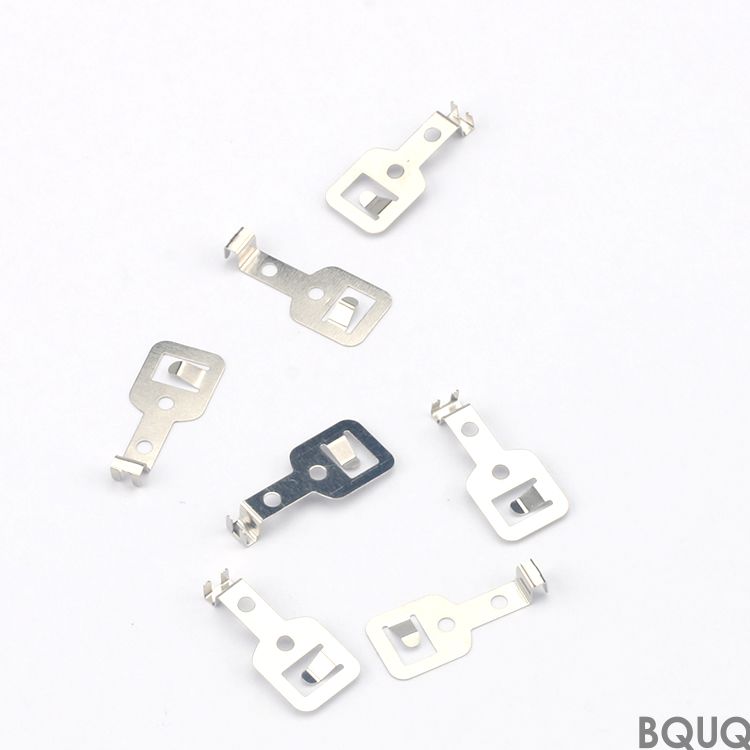
Consumer Electronics Battery Shrapnel Stamping: Progressive Die + Selective Plating, 2M pcs/Month
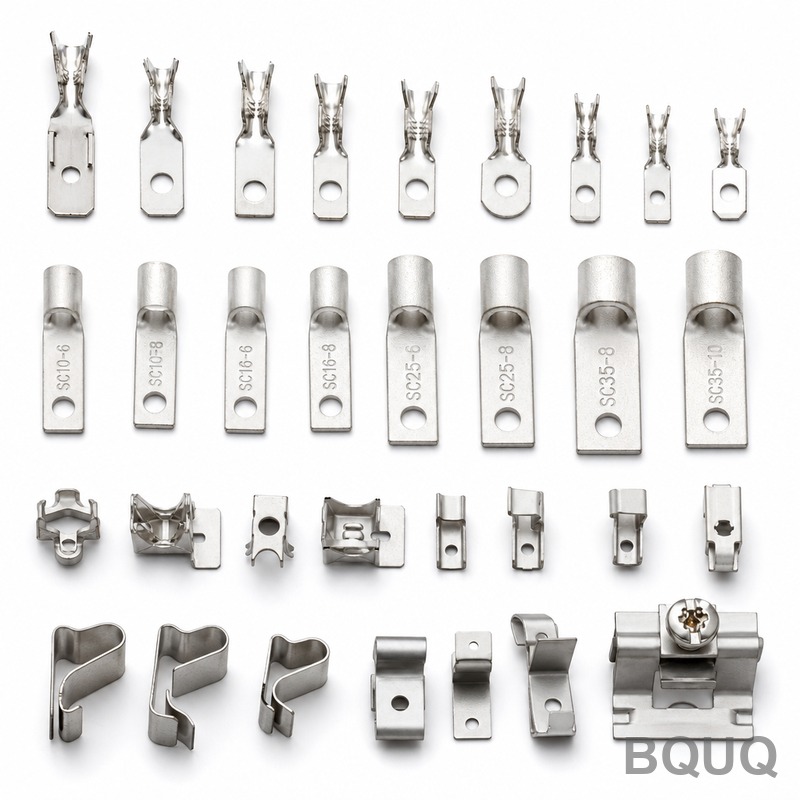
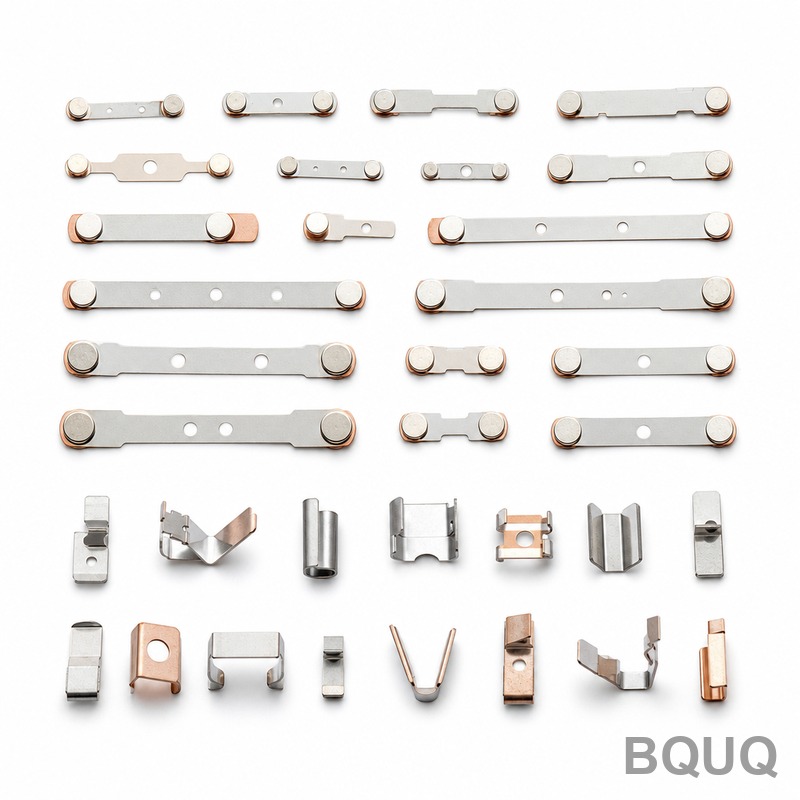
The battery shrapnel in a phone, earbud or smartwatch is a part consumers never see but use every day: press it down when the battery goes in, it has to spring back, and contact force must not decay after tens of thousands of cycles. The material needs springiness, the contact area needs conductivity - and springy alloys are usually poor conductors. The smart answer is one part, two materials: spring-tempered base metal with selectively plated gold or silver contacts.
Project Background & Challenge
A consumer electronics brand was qualifying battery shrapnel for a TWS earbud program: 0.12mm stainless, 8×4mm profile, selective gold plating on the contact area, contact force 0.2-0.35N, 30,000 insertion cycles, 2 million pieces a month. The previous supplier could not hold plating position - gold where it should not be, none where it should - and yield sat around 70%.
The challenges: burr and shear quality on 0.12mm thin stock in a progressive die; positioning accuracy of selective plating; and million-piece consistency that no amount of manual sorting can deliver.
BQUQ Process Solution
16-Station Progressive Die
Blanking, sizing, rib coining, forming and straightening complete in one die. The rib station adds stiffness at the contact point, forming angles are pre-set with springback compensation, and in-die pilot pins guide the strip throughout so 0.12mm stock runs at high speed without skew or stacking.
Selective Plating & 100% Inspection
Continuous reel-to-reel selective plating with plating position controlled by the same die registration; coating thickness verified by X-ray fluorescence per batch. Finished parts pass 100% CCD inspection for appearance and plating position, and force decay curves are sampled per batch with the report shipped.
Key Specifications
| Item | Specification |
|---|---|
| Material | Stainless / phosphor bronze (per drawing) |
| Stock thickness | 0.10-0.20mm |
| Contact force | Per drawing ±10%, decay curve sampling |
| Surface | Selective gold/silver plating, XRF thickness check |
| Die | 16-station progressive, in-die pilot guiding |
| Volume | 2 million pcs/month |
| Inspection | 100% CCD + XRF thickness + force sampling |
| System | ISO9001:2015 |
Quality Control & Delivery
First and last articles are fully checked per batch, SPC monitors stock thickness and bend angles, coating thickness is XRF-checked per batch and appearance is 100% CCD-inspected. Pilot of 100,000 pieces ships in 15 days; after validation the program rolls at 2 million pieces a month.
Related Products & Resources
To see more parts in this category and how we scale them, browse the Stamping Terminals & Contacts category page, or these related products:
- Stainless Steel Power Spring Contact / Battery Connector Plate
- High-Precision Electrical Contact Stamping Parts
Related Q&A: What Is Driving the Growth of Stamped EMI Shielding Parts? More Q&A is in our FAQ Center.
For our capabilities, equipment and quality system, visit About BQUQ and Factory Strength.
FAQ
What yield can you hold stamping 0.12mm shrapnel?
Stable volume yield above 97%. Three gates do it: precise die clearance, in-die pilot guiding, and 100% CCD inspection. Burr stays within 10% of stock thickness.
What if selective plating position drifts?
Plating position is registered by the same die pilots used for cutting, so the plated zone and the part stay aligned; every batch is sampled for plating position and XRF thickness, and out-of-spec batches are blocked at the gate.
How do you verify force decay?
Insertion-life and force-decay curves are sampled per batch with reports shipped; material lots are traceable, so a bad spring-temper lot is caught at incoming inspection before it ever reaches the die.