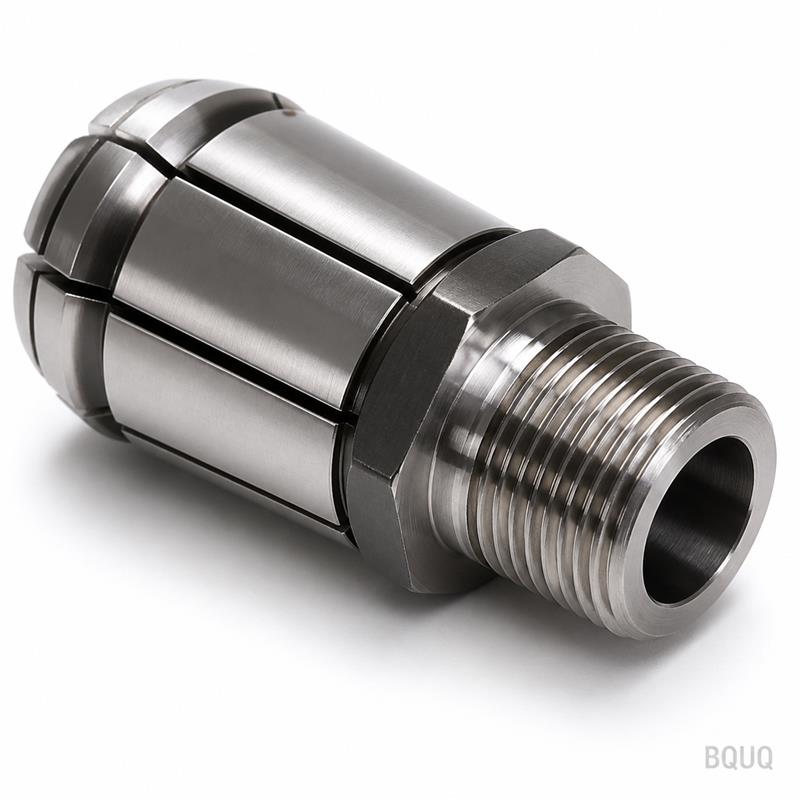
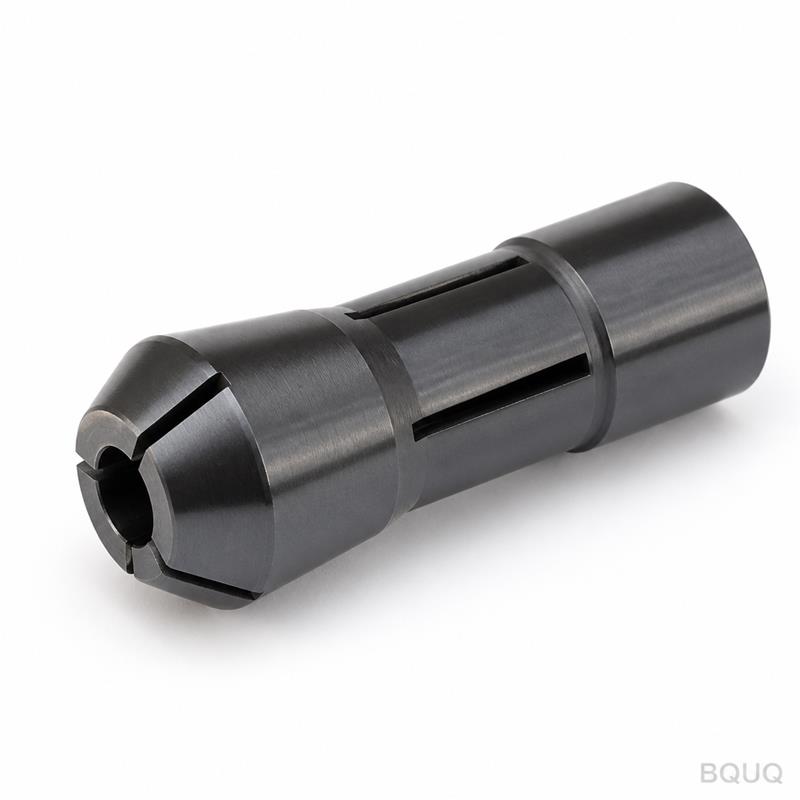
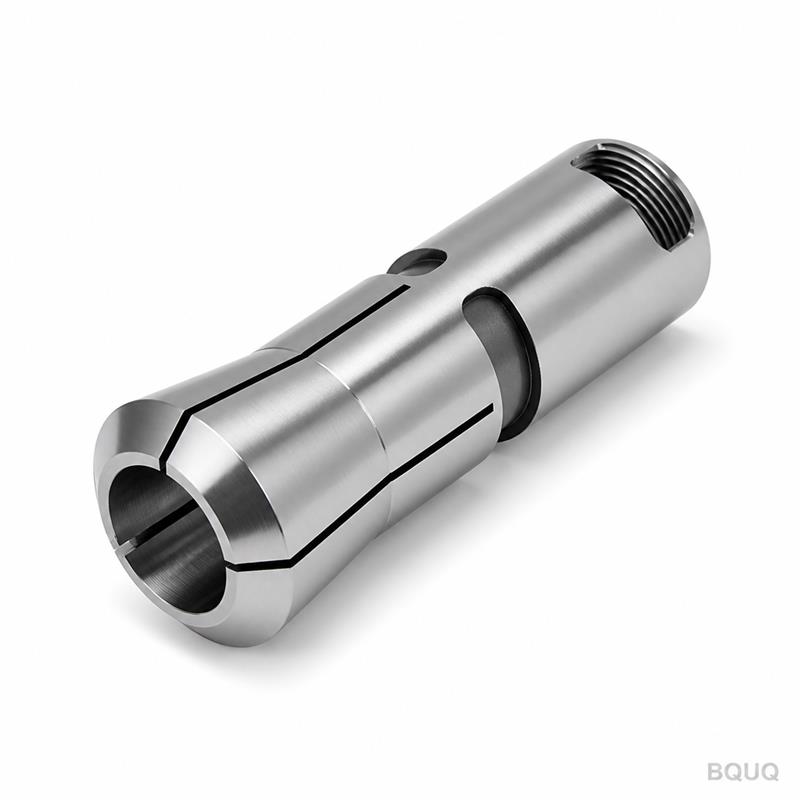
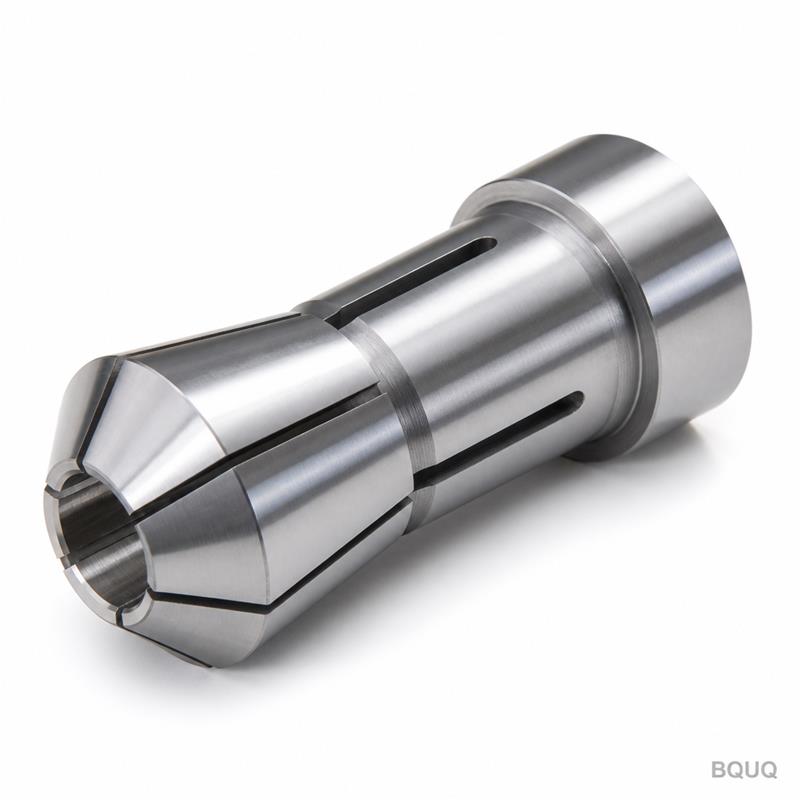
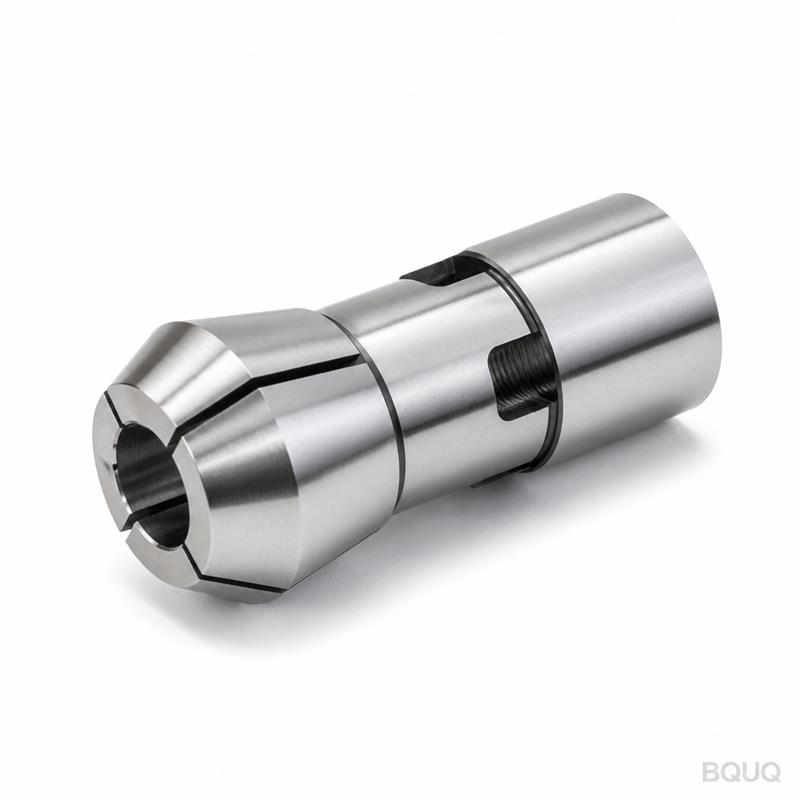
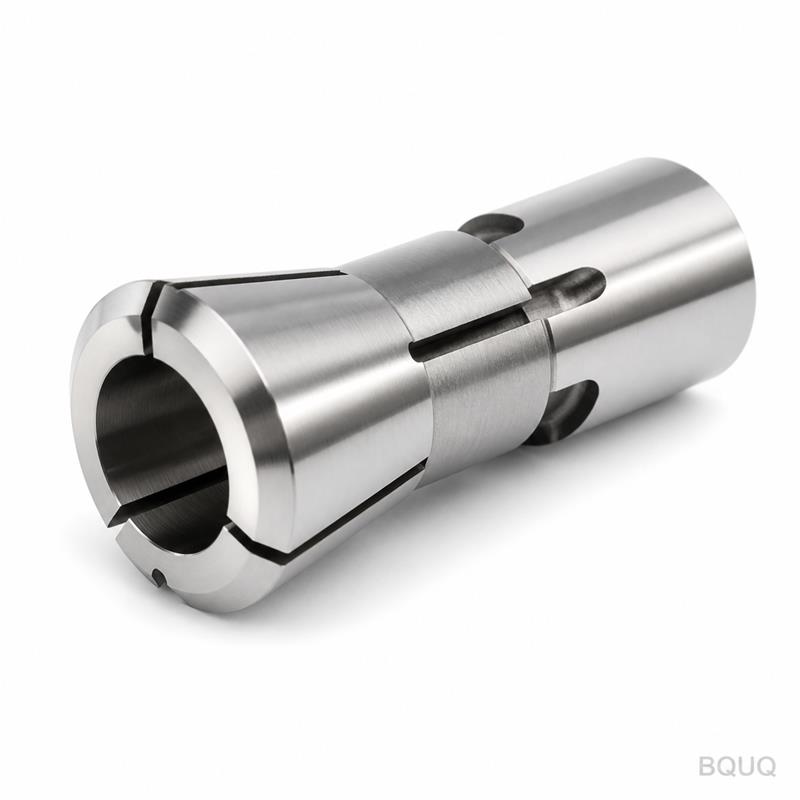
BQUQ CNC Machined Auto Lathe Extended Collet Series | Precision Runout Control
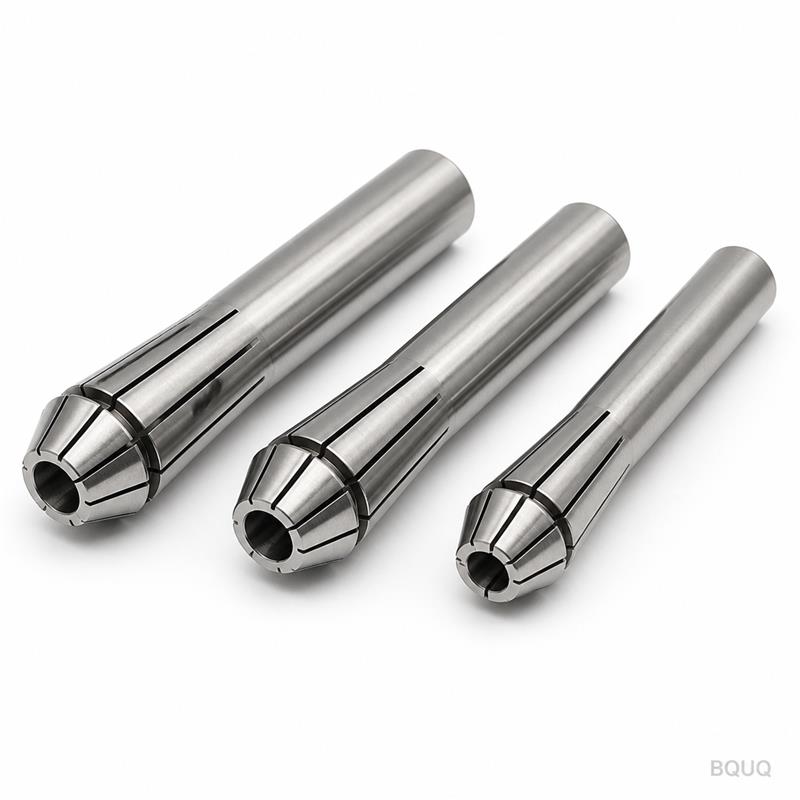
What This Extended Collet Series Does Differently on Your Auto Lathe This is a CNC machined collet chuck system designed specifically for auto lathes that need extended reach into deep bores or over l
Get a Fast Quote for This Part
Send us your drawing / quantity / material — reply within 24h.
What This Extended Collet Series Does Differently on Your Auto Lathe
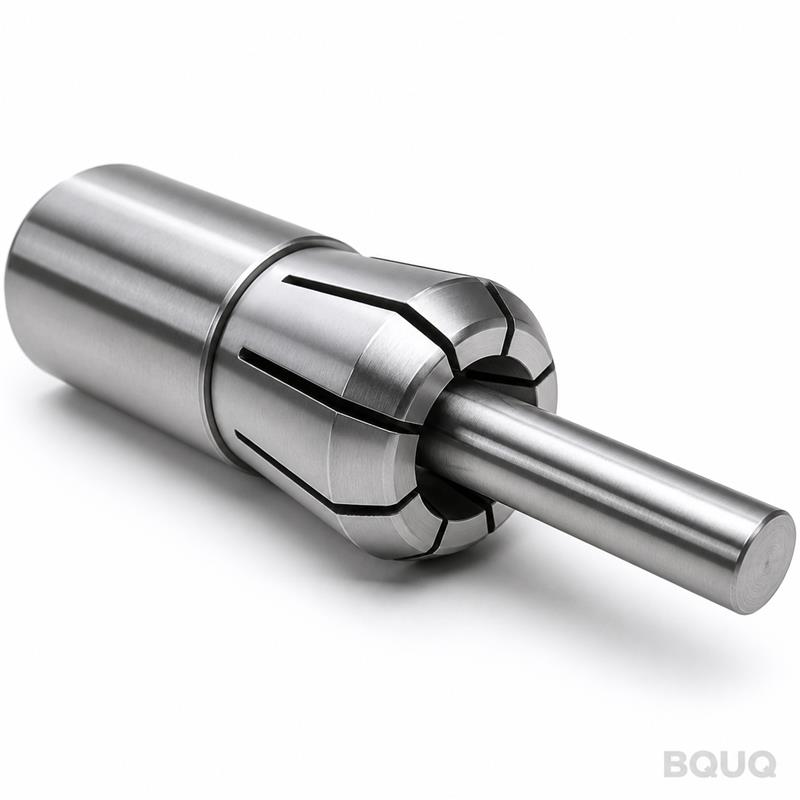
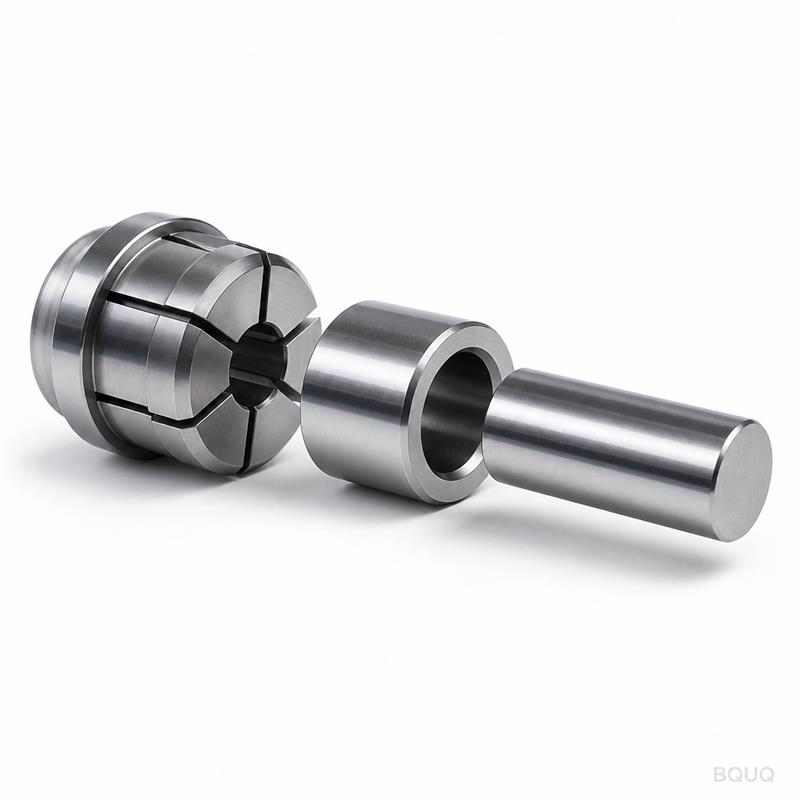
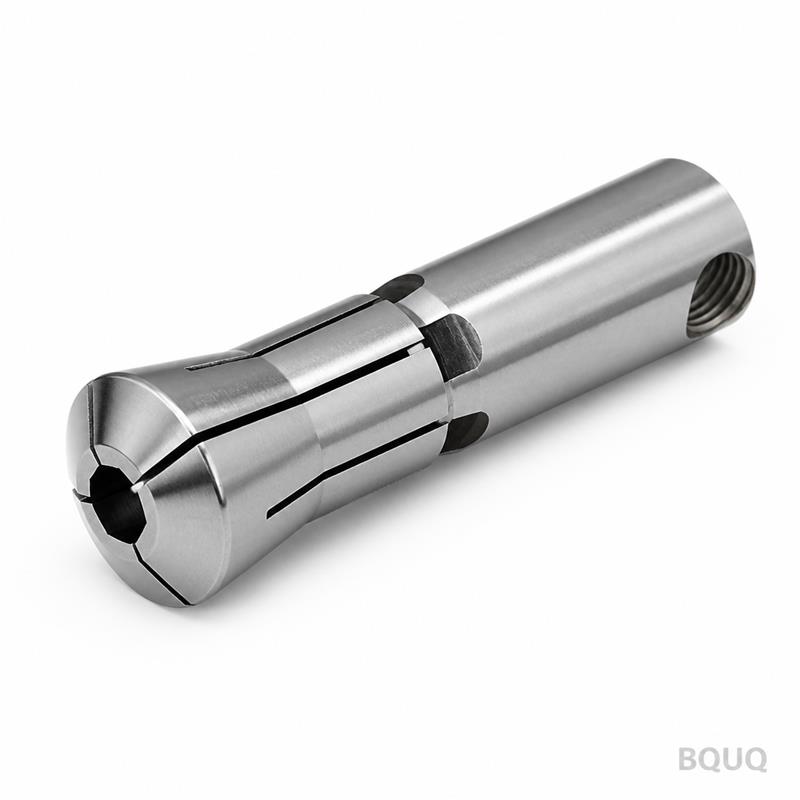
This is a CNC machined collet chuck system designed specifically for auto lathes that need extended reach into deep bores or over long protruding toolholders. The extended nose length grips bar stock or tool shanks up to 30 mm further out than standard ER collets, reducing vibration and deflection at the cutting edge. You get a guaranteed runout of 0.005 mm TIR (measured at the nose), a surface finish of Ra 0.4 on the gripping bore, and a consistent hardness of 58–60 HRC after heat treatment. Lead time is 15 working days for standard sizes, and we ship from our Dongguan factory with no MOQ on any item in this series.
How the Extended Nose Geometry Prevents Tool Deflection at Depth
Standard collets lose stiffness when the tool extends beyond the chuck face. Our extended series adds a hardened steel nose sleeve that supports the tool shank over a longer contact length—typically 1.5x the diameter of the collet pocket. This means for a 20 mm shank, you get 30 mm of continuous grip instead of the usual 20 mm. The result is measurable: deflection under a 50 N radial load drops from 0.012 mm (standard ER32) to 0.006 mm with this extended design. That translates directly to better surface finish and longer insert life when you are machining deep pockets or using long reach boring bars.
Materials and Heat Treatment We Use for the Extended Collet Bodies
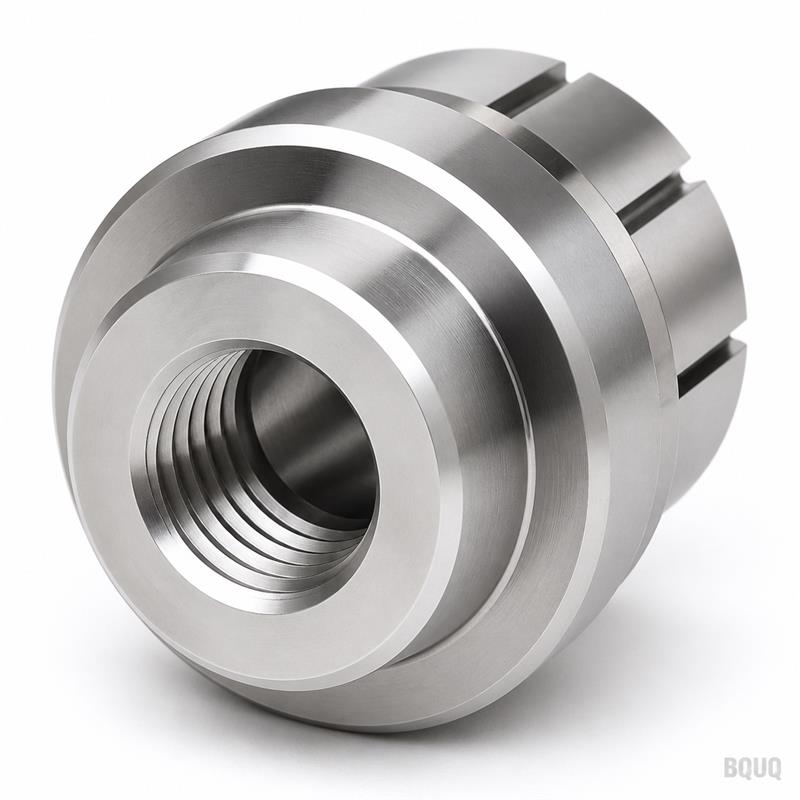
We machine the collet bodies from 8620 alloy steel, then carburize and quench to reach the 58–60 HRC case hardness. The gripping leaves are ground after heat treatment—never before—so the hardened layer remains intact across the entire clamping surface. The internal threads are cut on a CNC lathe with a tolerance of 6H, which keeps the pull-back action smooth and repeatable. For the spring collets inside the series, we use 65Mn spring steel with a fatigue life tested to 500,000 cycles without losing clamping force beyond 5%. Every batch is verified with a Rockwell hardness test report included in the shipping documents.
Inspection Before Every Shipment: Runout and Surface Finish Data
We do not ship a single extended collet without a full inspection report. Each unit is checked on a precision test arbor for TIR runout at the nose—the pass criterion is 0.005 mm or better. Surface finish on the gripping bore is measured with a profilometer; we reject anything above Ra 0.4. We also test the clamping force at 80% of max torque to confirm the collet closes evenly across all slots. The report includes the measured runout value, the actual hardness reading, and a photo of the part with the batch number. This is standard practice, not a paid extra.
Specification
Value / Range
Collet Series
ER16, ER20, ER25, ER32, ER40 (extended nose variants)
Gripping Range
1.0 mm – 26.0 mm (depending on series)
Extended Nose Length
+10 mm to +30 mm over standard ER collets
Body Material
8620 alloy steel, carburized
Spring Material
65Mn spring steel
Hardness (case)
58–60 HRC
Runout (TIR at nose)
0.005 mm max
Surface Finish (gripping bore)
Ra 0.4 μm
Thread Tolerance
6H
Lead Time
15 working days (standard), 7 days (rush, +20% fee)
MOQ
No MOQ – order 1 piece or 1000 pieces
Why Our Extended Collets Outperform Imported Equivalents in Cost Per Part
We are a precision manufacturing facility in Dongguan with 20 years of experience in CNC machining, stamping, and springs. Because we control the entire process—from raw bar stock to final grinding—we eliminate the middleman markup you see on European or Japanese collets. The same 0.005 mm runout that costs $80 per unit from a German brand costs $28 from BQUQ for the extended series. And because we make our own springs, we can guarantee cycle life without sourcing delays. If you are comparing quotes, include the cost of import freight and customs clearance; our pricing is EXW or FOB Shenzhen, which typically saves another 10–15%.
Retrofit Compatibility and Which Auto Lathes This Series Fits
This extended series is designed as a drop-in replacement for standard ER collet chucks on most Japanese and Taiwanese auto lathes—Citizen, Star, Tsugami, and Hanwha models are common fits. The external taper and thread pitch match the original chuck nut, so you do not need to modify your spindle. If you are unsure about your machine's interface, send us a drawing or a photo of your current chuck nut, and we will confirm compatibility within 24 hours. We also offer custom bore geometry for special tool shanks—just specify the shank diameter and the required grip length in your inquiry.
Custom Sizes and Special Bore Profiles for Non-Standard Tooling
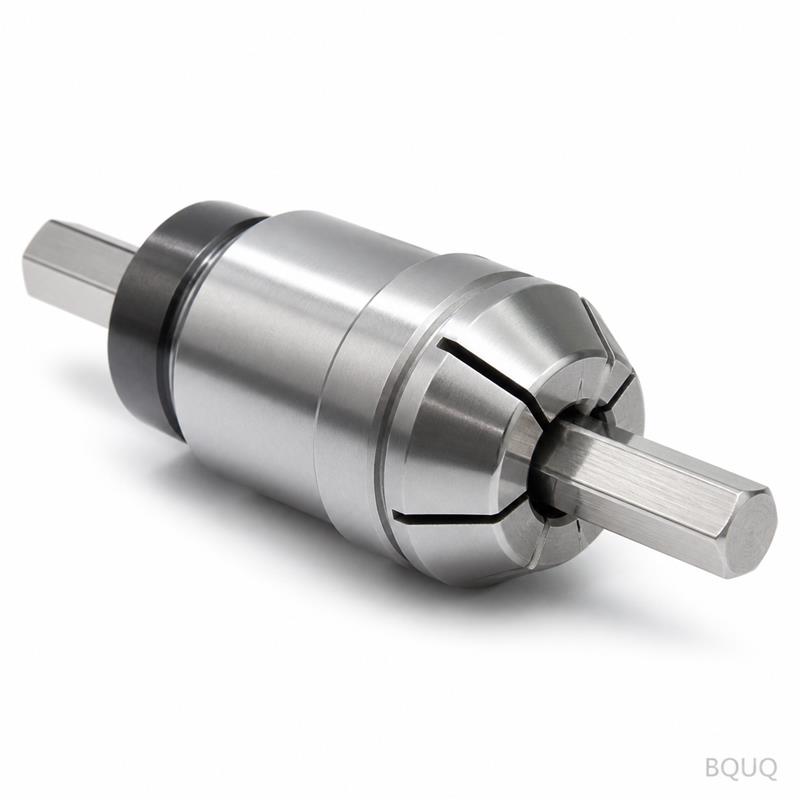
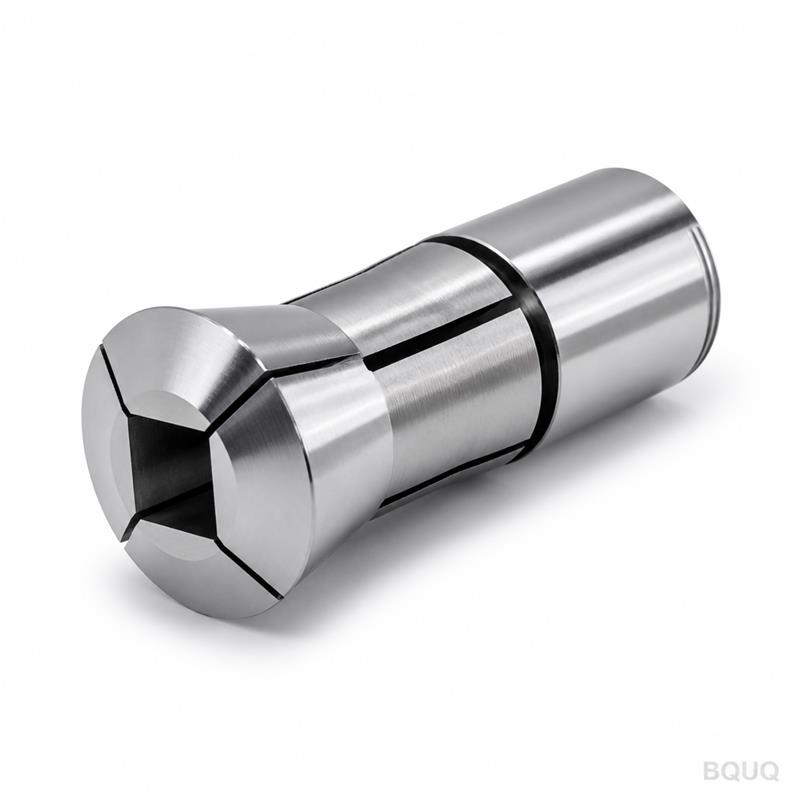
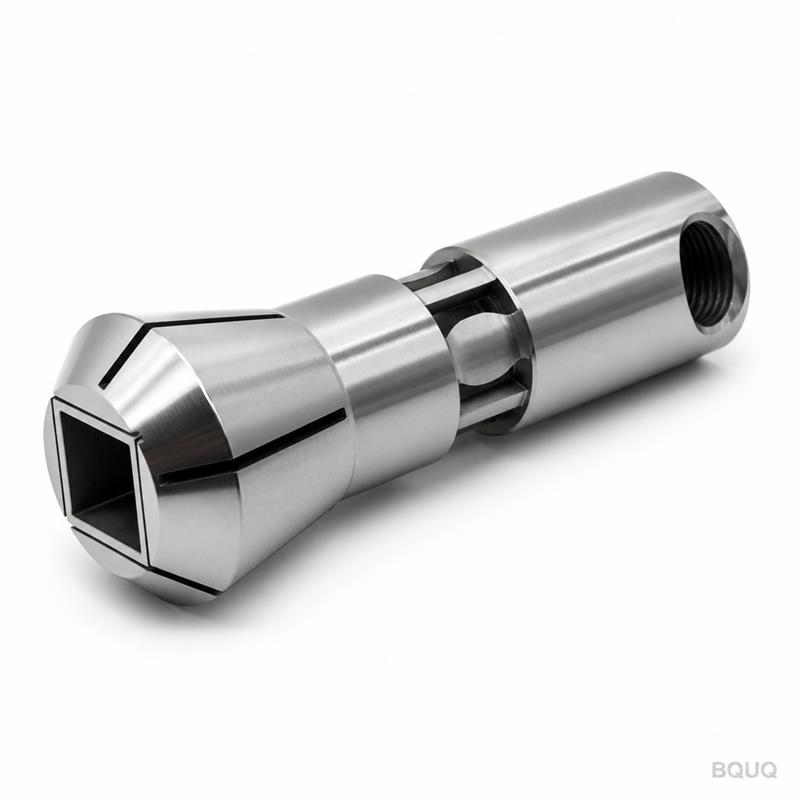
Standard ER collets stop at round bores, but our extended series can be machined with hex, square, or stepped bores upon request. The most common custom we run is a stepped bore for a drill with a reduced shank—we machine the back step to 0.01 mm concentricity with the front gripping section. This is done in-house on our CNC lathes, so the added cost is only $15–$25 per unit depending on complexity. For production runs above 200 pieces, we will waive the custom machining setup fee entirely.
What is the MOQ for the Extended Collet Series?
There is no MOQ—you can order a single collet for prototype testing or a full production batch, and the unit price remains the same.
Can you customize the extended nose length or bore profile?
Yes, we can extend the nose up to 30 mm beyond standard, and we machine round, hex, square, or stepped bores with 0.01 mm concentricity for the custom section.
How do you verify runout and hardness before shipment?
Every collet is tested on a precision arbor for TIR runout (0.005 mm max) and checked with a Rockwell hardness tester (58–60 HRC), with the report included in your shipment.
What is your lead time if I need a rush order?
Standard lead time is 15 working days from drawing approval; rush orders are shipped in 7 days with a 20% expedite fee.
For the right toolholder setup, check our CNC cutting tool selection guide to match the collet bore with your end mill or drill. To understand how our 0.005 mm runout fits into your overall part quality, read our CNC machining tolerances guide—it explains what runout means for your final part dimensions.
Send us your drawing or your current collet nut specs, and we will send a firm quote within 12 hours. Email sc@bquq.com or WhatsApp +86 13713157787. We ship worldwide from our Dongguan factory, made in China, with no MOQ and full inspection reports on every piece.
Straight answers from the factory, not a sales brochure.
How do I get a quote for this part?
Send your drawing (STEP, IGES, DWG, DXF or PDF) with quantity and target material to sc@bquq.com or WhatsApp +86 137 1315 7787. Our engineers review the drawing and reply with price, lead time and tooling cost.
What is your MOQ?
We do not set a fixed MOQ. The minimum is decided per part and per process, so tell us your target quantity and we quote against it. Small trial batches are accepted for new parts.
What is the lead time?
Lead time is agreed per order, based on the date you need, the quantity, the material and whether tooling is required. Send your target date with the drawing and we confirm what is achievable before you commit.
What tolerance can you hold?
CNC machining holds ±0.005 mm. Stamping, spring and extrusion parts are made to the tolerances marked on your drawing, and we confirm achievable values at quotation so there are no surprises at inspection.
Can you manufacture parts to my drawing?
Yes. Every order is made to the customer drawing or sample. We run CNC machining, metal stamping, spring coiling and aluminium heat sink extrusion in-house in Dongguan, so one supplier covers the whole part.
STEP, IGES, DWG, DXF and PDF. A 2D drawing with tolerances and surface finish requirements is preferred alongside the 3D model. Hand sketches can be quoted after our engineers redraw them.
How is quality controlled?
Inspection runs through the process, not only at the end: first article approval, in-process checks and a final report per batch, measured with CMM and optical equipment. Material certificates are available on request.
Where is the factory and do you ship worldwide?
Our factory is in Dongguan, Guangdong, China, operating since 2005. We ship worldwide by express, air and sea, and work with the forwarder nominated by the buyer.