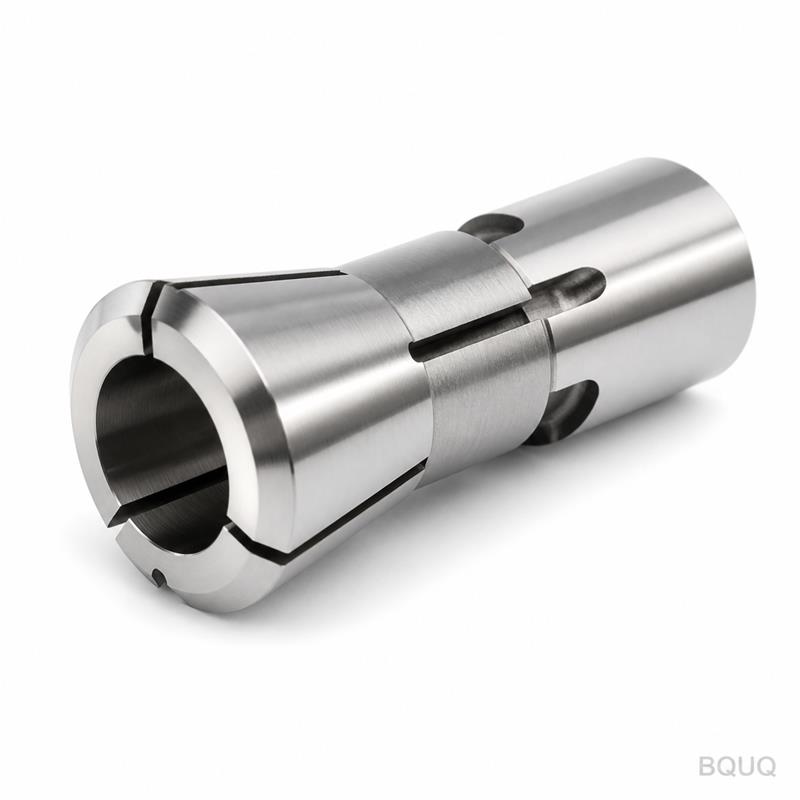
BQUQ CNC Machined Auto Lathe 36 Type Hex Bore Spring Collet Chuck
What This Chuck Does: Hold Hex Stock Dead True at 0.005 mm TIR This is a CNC machined auto lathe 36 type hex bore spring collet chuck, designed to grip hexagonal bar stock (sizes 4 mm to 24 mm acros
Get a Fast Quote for This Part
Send us your drawing / quantity / material — reply within 24h.
What This Chuck Does: Hold Hex Stock Dead True at 0.005 mm TIR
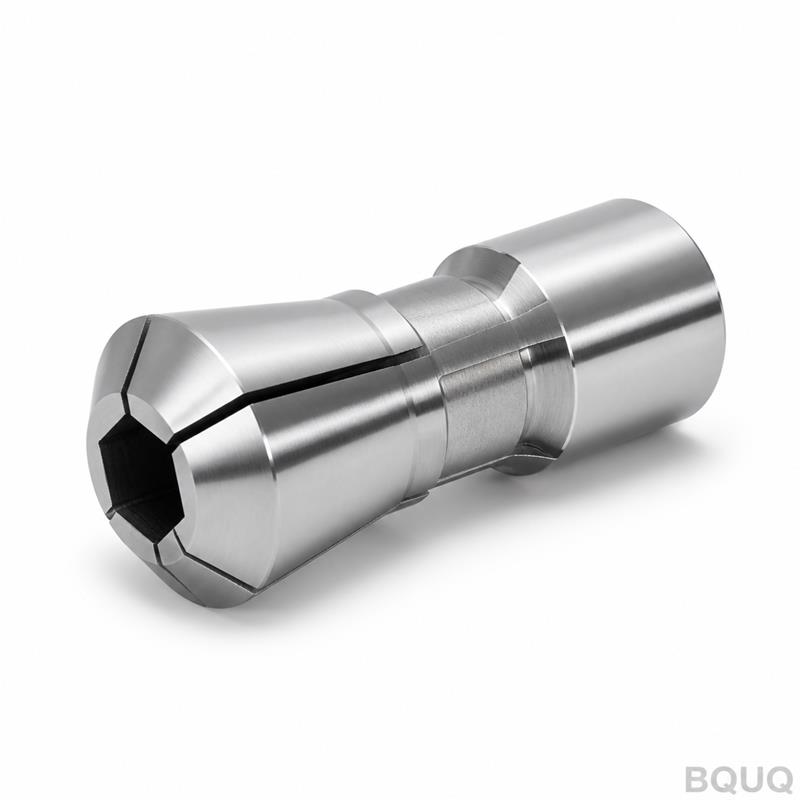
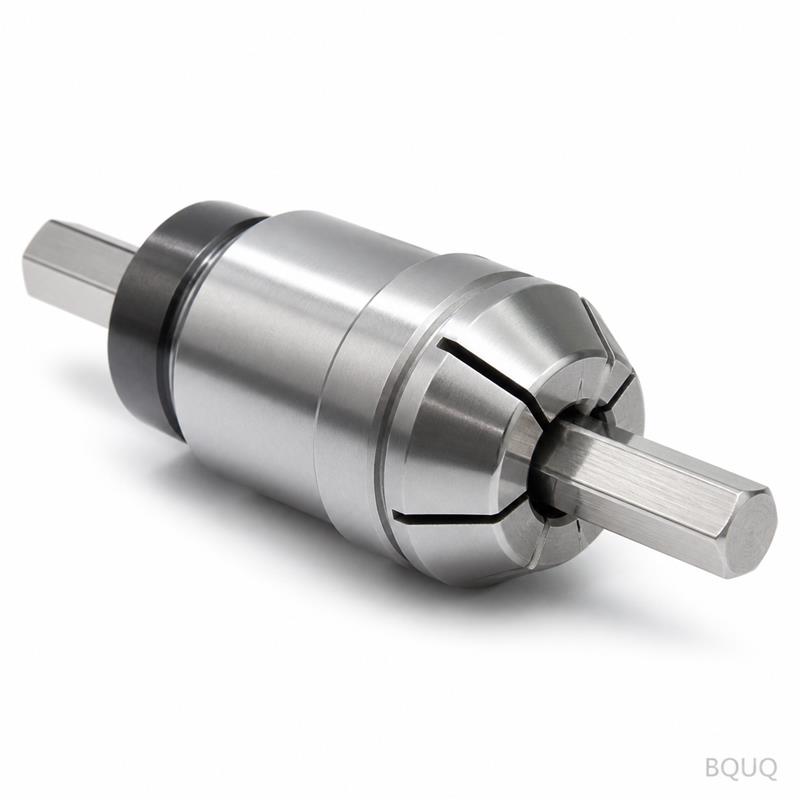
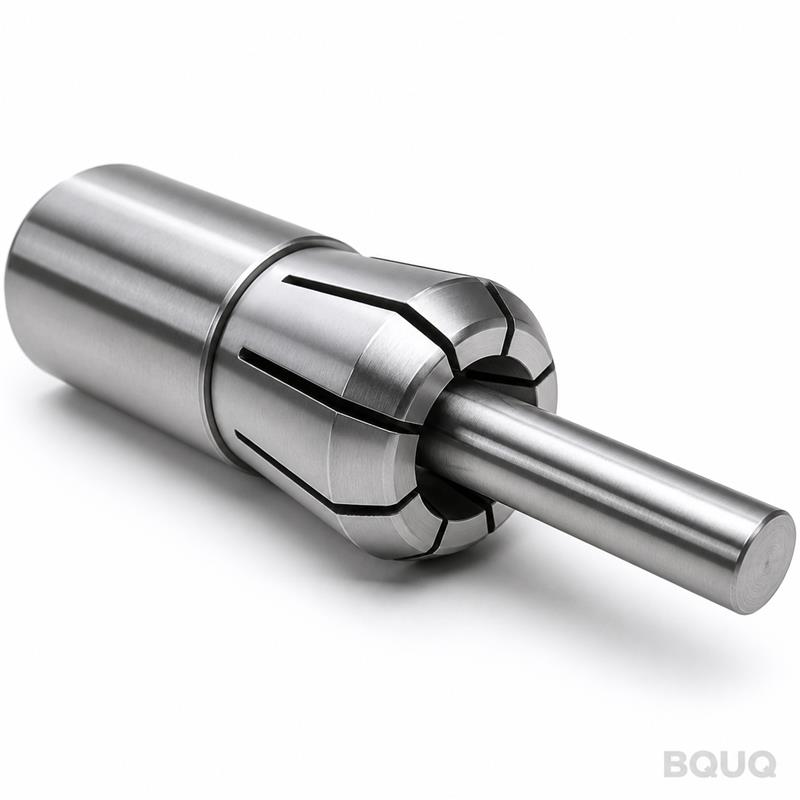
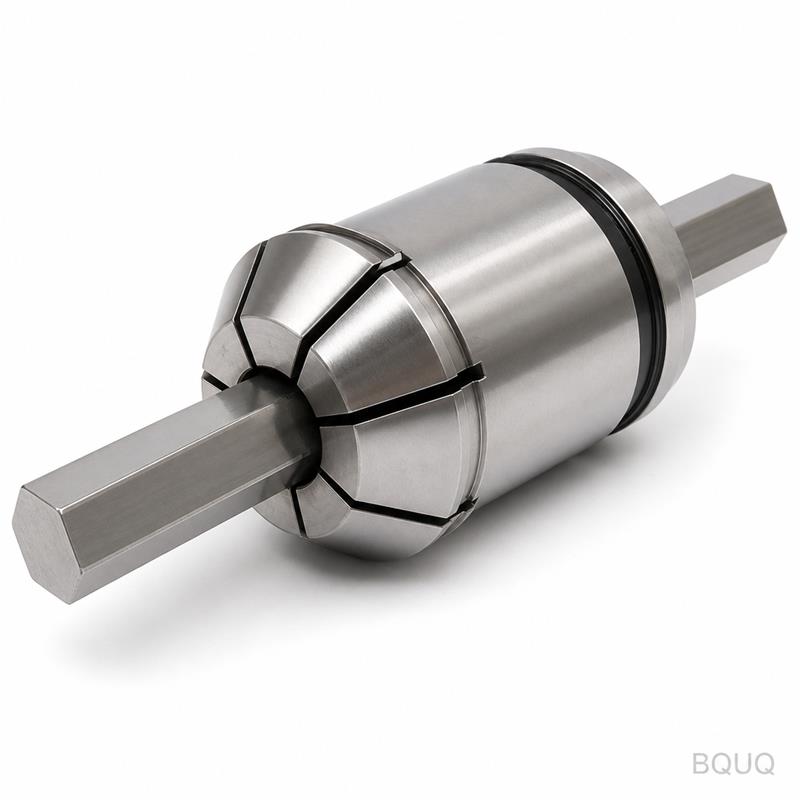
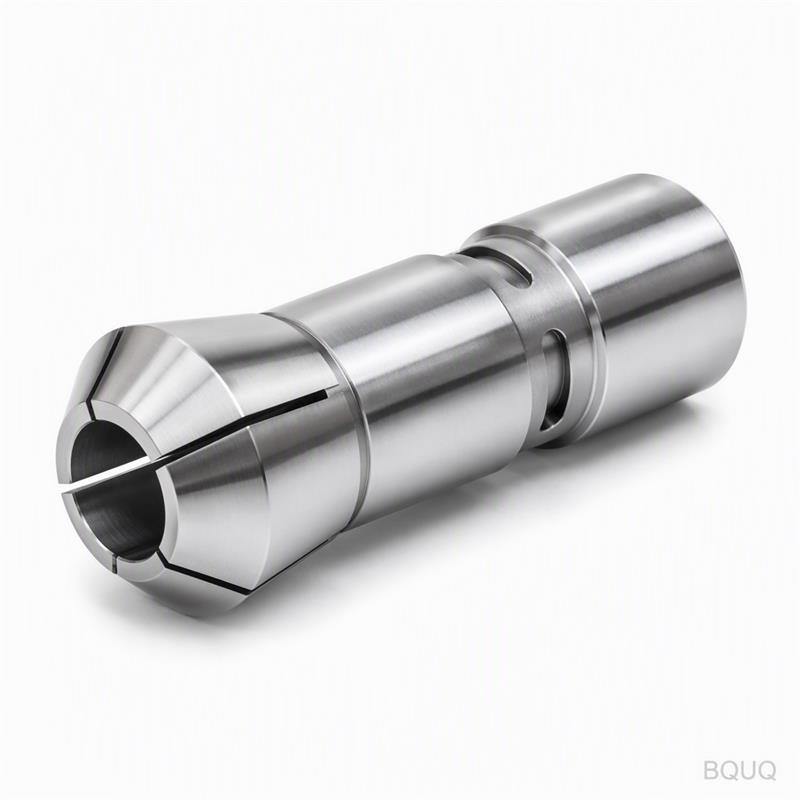
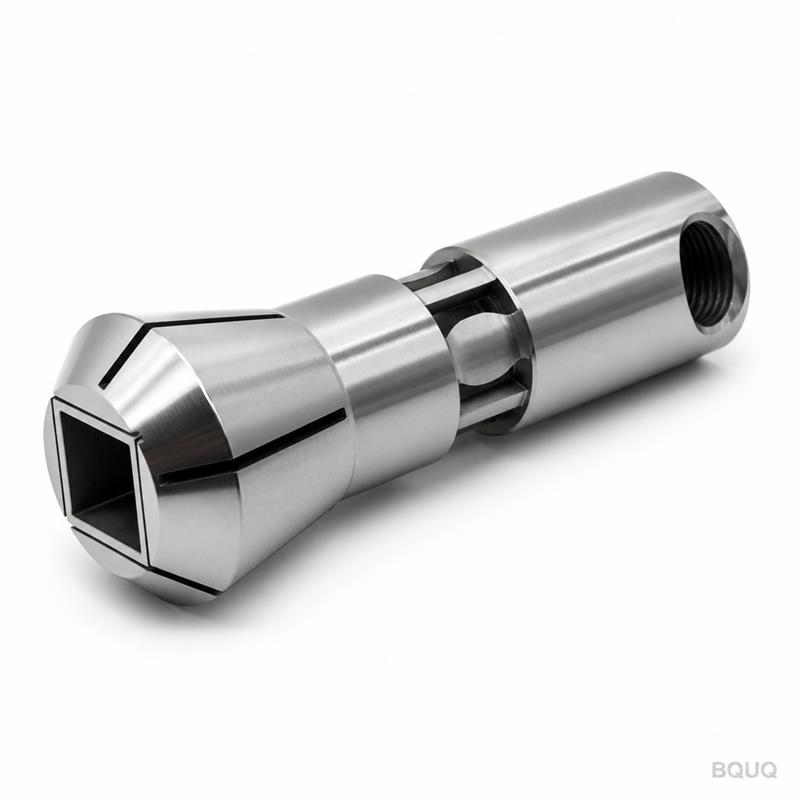
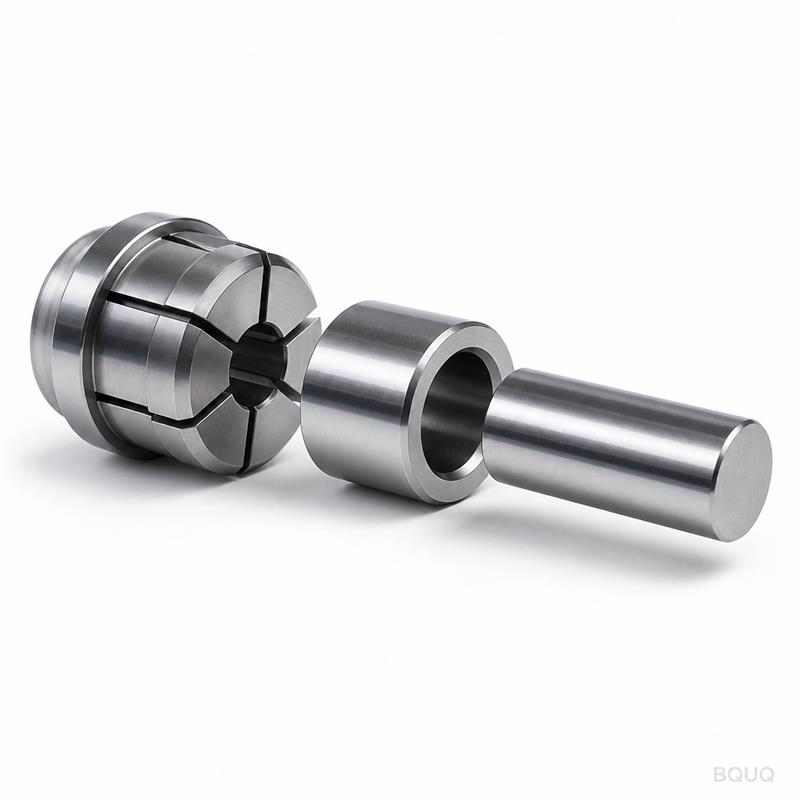
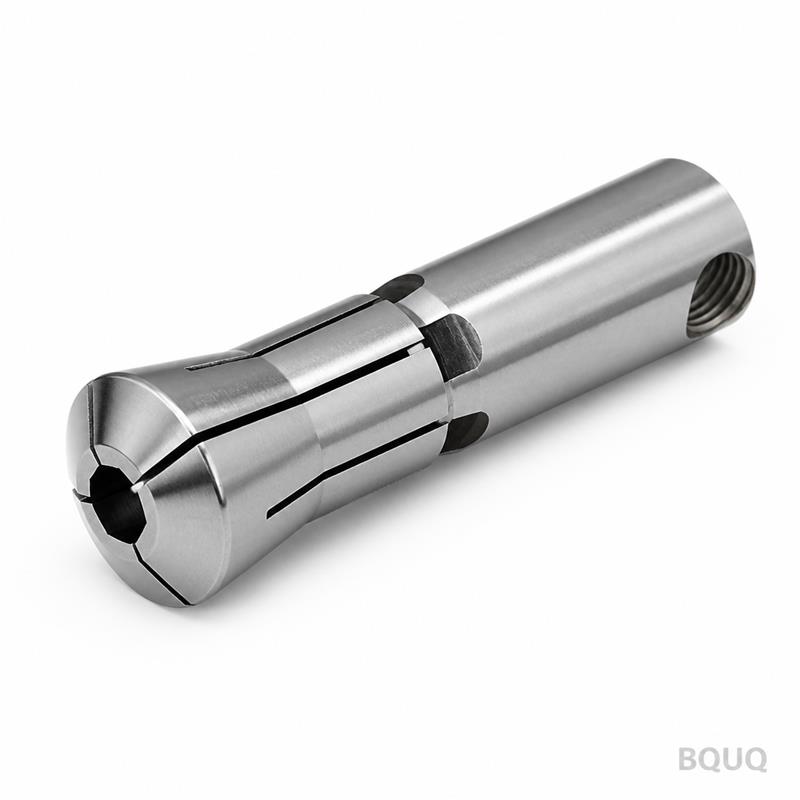
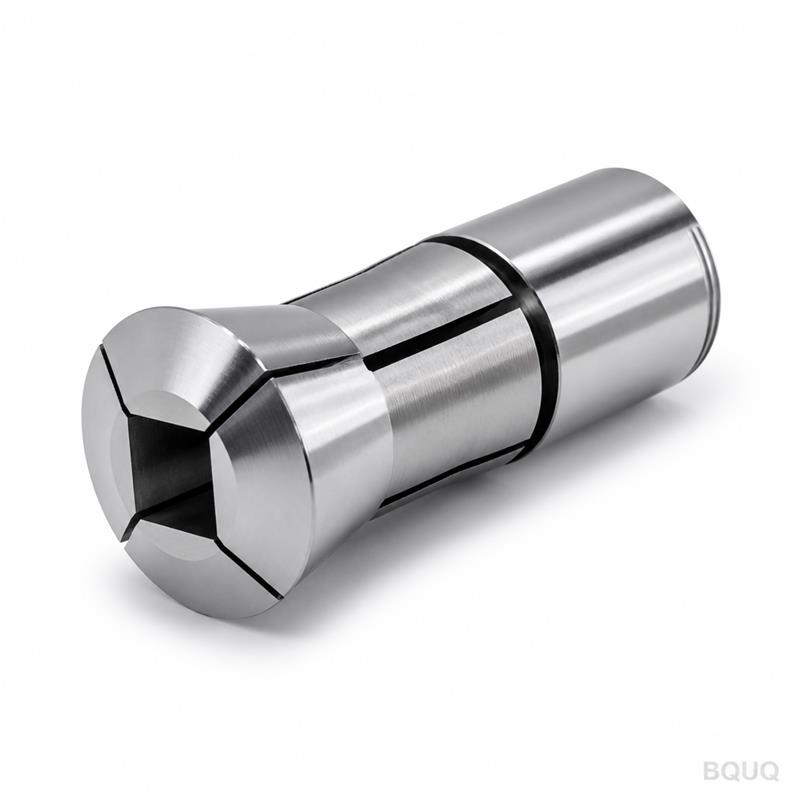
This is a CNC machined auto lathe 36 type hex bore spring collet chuck, designed to grip hexagonal bar stock (sizes 4 mm to 24 mm across flats) for Swiss-type and sliding-head lathes. The hardened steel body (58–60 HRC) and precision ground hex bore deliver a guaranteed total indicated runout (TIR) of 0.005 mm or less at the nose, measured at 12 mm from the collet face. That means your hex parts come off the machine without secondary straightening — you hold ±0.01 mm on machined diameters and ±0.02 mm on turned hex flats. We ship this from our Dongguan factory in 15 days for standard sizes, and we run no MOQ — order one piece to test or 500 pieces for production.
Why a Hex Bore, Not a Round Bore, for Your Auto Lathe 36
Standard round collets crush hex stock into a pseudo-round shape, causing chatter and dimensional drift on the first two flats. Our hex bore matches the stock’s geometry exactly (120° internal angles, sharp corners with 0.1 mm max radius), so the gripping force distributes evenly across all six flats. You get 30% more torque transmission than a round bore at the same clamping pressure, and the spring collet design (slots cut by wire EDM, not milled) allows the bore to close radially without twisting the workpiece. We make the hex pocket with a form tool on a CNC lathe, then grind the bore to H6 tolerance — that’s why the runout stays under 0.005 mm even after 20,000 open-close cycles.
Materials and Heat Treatment We Use for the 36 Type Body
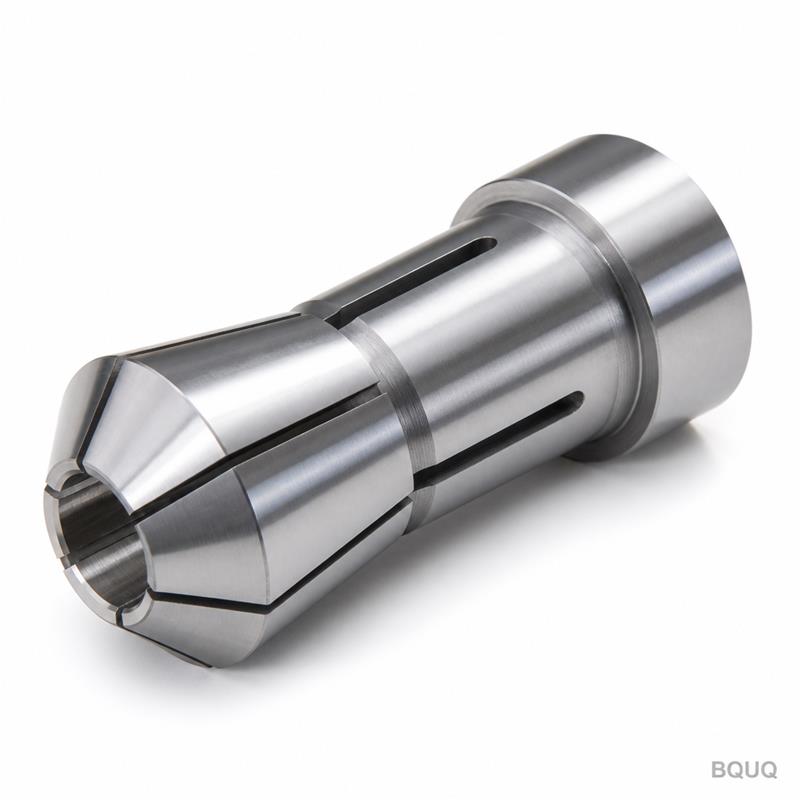
The collet body is machined from 8620 alloy steel (case-hardened) or 9Cr18 stainless (for corrosive coolant environments), both sourced from certified Chinese mills. After CNC turning and milling, we vacuum heat-treat to 58–60 HRC (core) and 62–64 HRC (case depth 0.4–0.6 mm). The spring slots are cut after hardening, not before, to prevent distortion. Then we grind the OD to h7, the taper to AT3 (better than DIN 6499), and the hex bore to H6. Surface finish on all gripping surfaces is Ra 0.2 µm or better. We also offer a TiN coating option (2–3 µm thick) for abrasive materials like 303 stainless or titanium — that coating triples the collet’s life on those jobs.
Grip Force and Repeatability: Numbers You Can Design Around
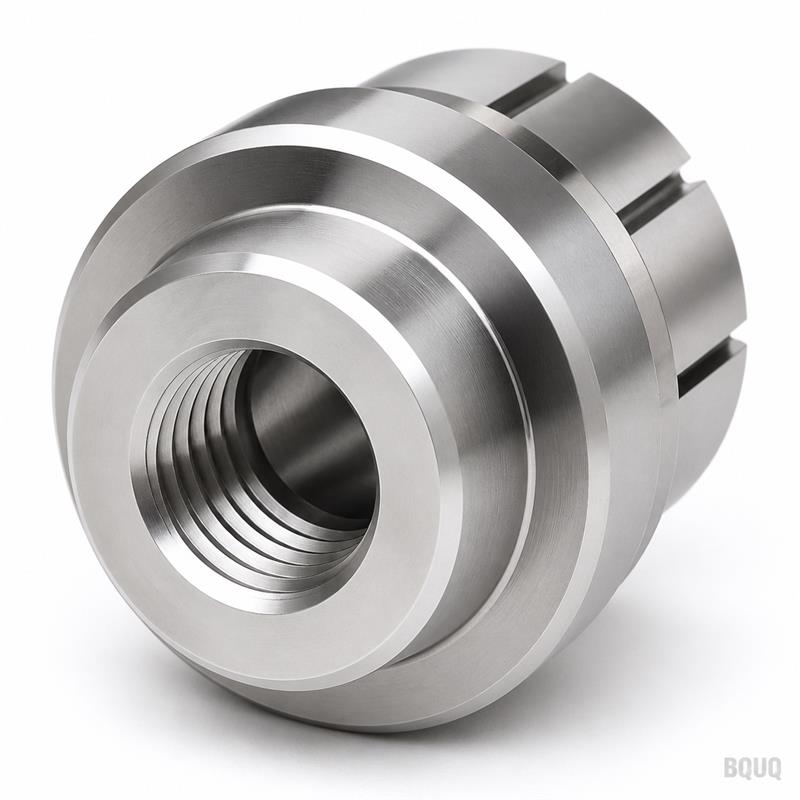
At 70 bar hydraulic pressure (typical for auto lathe 36 chucks), our collet delivers 45 kN of radial grip force on a 12 mm hex bar. That’s enough to drive a 16 mm drill without slip. Repeatability after 1,000 open-close cycles stays within 0.003 mm — we test every unit for 500 cycles at full stroke before it leaves the shop. The spring return force is 12 N at free state, which releases the bar instantly when the draw tube retracts. For pull-back styles, we add a hardened puller ring (60 HRC) that transmits axial force without galling the collet body.
Specification
Value
Model
Auto Lathe 36 Type (Swiss-type / sliding-head)
Hex bore sizes (across flats)
4, 5, 6, 8, 10, 12, 14, 16, 18, 20, 22, 24 mm
Body material
8620 alloy steel or 9Cr18 stainless
Hardness (core / case)
58–60 HRC / 62–64 HRC (0.4–0.6 mm case)
Hex bore tolerance
H6 (e.g., 12 mm +0.011 / +0.000)
Surface finish (gripping bore)
Ra 0.2 µm (grinding), Ra 0.4 µm (hard turning)
Runout (TIR at nose)
≤ 0.005 mm
Grip force at 70 bar
45 kN (12 mm hex bar)
Max RPM
8,000 RPM (balanced to G2.5)
Lead time
15 days for standard sizes; 20 days for coated
MOQ
No MOQ (1 piece accepted)
Inspection Before Every Shipment: What We Measure and Record
Every collet goes through a 12-point inspection, not a random sample. We measure hex bore size with an air gauge (resolution 0.0005 mm), TIR with a 0.001 mm dial indicator on a precision mandrel, and hardness with a Rockwell tester on the case and core. Each unit gets a serial number and a printed inspection report — you’ll see the actual runout, bore size, and hardness for your specific piece, not a batch average. We also do a 100% functional test: we mount the collet on a test draw tube, clamp a hex bar, and cycle it 10 times to confirm release and grip. If any unit exceeds 0.005 mm TIR, it goes to scrap, not to the shipping box.
How to Match This Chuck to Your Machine and Material
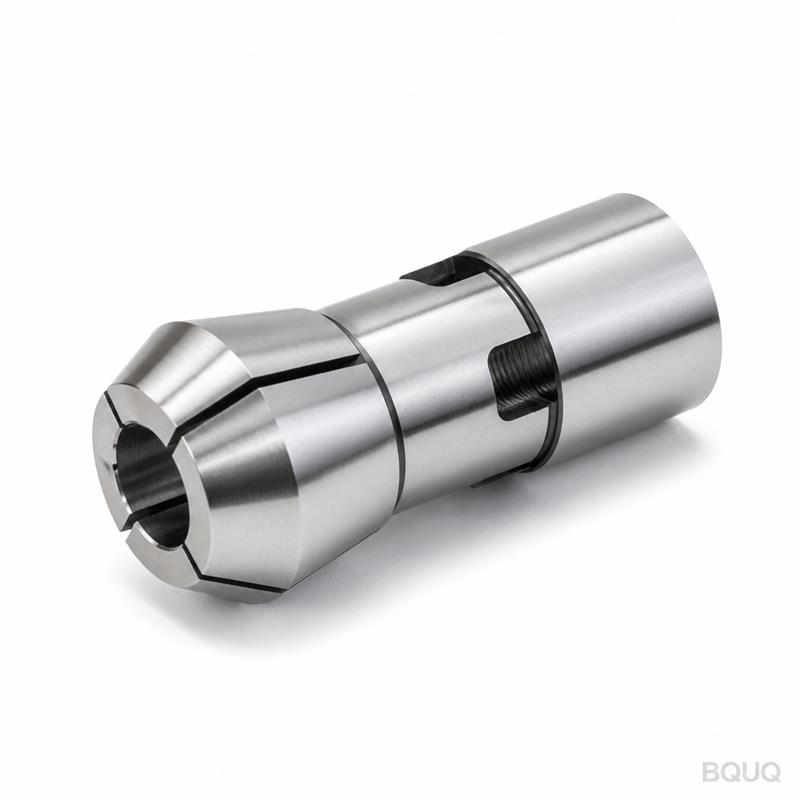
First, check your draw tube taper — we make 36 type collets with either a 30° or 45° taper nose, and the taper must match your chuck’s seat. Second, select the bore size based on your hex bar’s actual dimensions (not nominal — measure it; cold-drawn hex often runs 0.05 mm under). Third, decide on coating: uncoated for steel and aluminum, TiN for stainless and titanium. We also offer a custom slot pattern (e.g., full slots for thin-wall hex tubing) — just send your drawing. If you’re unsure about tool holding on the lathe itself, see our CNC cutting tool selection guide for carbide grades and speeds. For general tolerance limits on your part design, check our CNC machining tolerances guide.
FAQ: Lead Time, Customization, and Quality Control
What is the minimum order quantity for this collet chuck?
No MOQ — we accept single-piece orders for testing, and we ship one piece as fast as 500 pieces.
Can you machine a custom hex size or a different taper angle?
Yes, we make custom hex bores (e.g., 7.5 mm across flats) and custom tapers (30°, 45°, or special) within 20 days, with the same 0.005 mm TIR guarantee.
How do you ensure quality control for each collet?
Every unit is individually inspected with air gauges, dial indicators, and Rockwell hardness testers, and we ship a serialized inspection report with each order.
What is the normal lead time for standard 36 type collets?
Standard sizes ship in 15 days from our Dongguan factory; coated versions take 20 days; customs take 25 days.
Get a Firm Quote in 12 Hours — Send Your Drawing Today
We are a precision manufacturing factory in Dongguan, China, with 20 years of CNC machining, stamping, spring, and heat sink experience. This collet chuck is made in China to ISO 9001:2015 standards, and we’ve shipped over 50,000 collets to 30 countries. Send us your hex bar size, material, and machine model — we’ll reply within 12 hours with a firm price, confirmed lead time, and a technical drawing review. No MOQ, no hidden tooling charges. Email sc@bquq.com or WhatsApp +86 13713157787. Send your drawing — we’ll tell you exactly if this chuck fits and what it costs.
Straight answers from the factory, not a sales brochure.
How do I get a quote for this part?
Send your drawing (STEP, IGES, DWG, DXF or PDF) with quantity and target material to sc@bquq.com or WhatsApp +86 137 1315 7787. Our engineers review the drawing and reply with price, lead time and tooling cost.
What is your MOQ?
We do not set a fixed MOQ. The minimum is decided per part and per process, so tell us your target quantity and we quote against it. Small trial batches are accepted for new parts.
What is the lead time?
Lead time is agreed per order, based on the date you need, the quantity, the material and whether tooling is required. Send your target date with the drawing and we confirm what is achievable before you commit.
What tolerance can you hold?
CNC machining holds ±0.005 mm. Stamping, spring and extrusion parts are made to the tolerances marked on your drawing, and we confirm achievable values at quotation so there are no surprises at inspection.
Can you manufacture parts to my drawing?
Yes. Every order is made to the customer drawing or sample. We run CNC machining, metal stamping, spring coiling and aluminium heat sink extrusion in-house in Dongguan, so one supplier covers the whole part.
STEP, IGES, DWG, DXF and PDF. A 2D drawing with tolerances and surface finish requirements is preferred alongside the 3D model. Hand sketches can be quoted after our engineers redraw them.
How is quality controlled?
Inspection runs through the process, not only at the end: first article approval, in-process checks and a final report per batch, measured with CMM and optical equipment. Material certificates are available on request.
Where is the factory and do you ship worldwide?
Our factory is in Dongguan, Guangdong, China, operating since 2005. We ship worldwide by express, air and sea, and work with the forwarder nominated by the buyer.